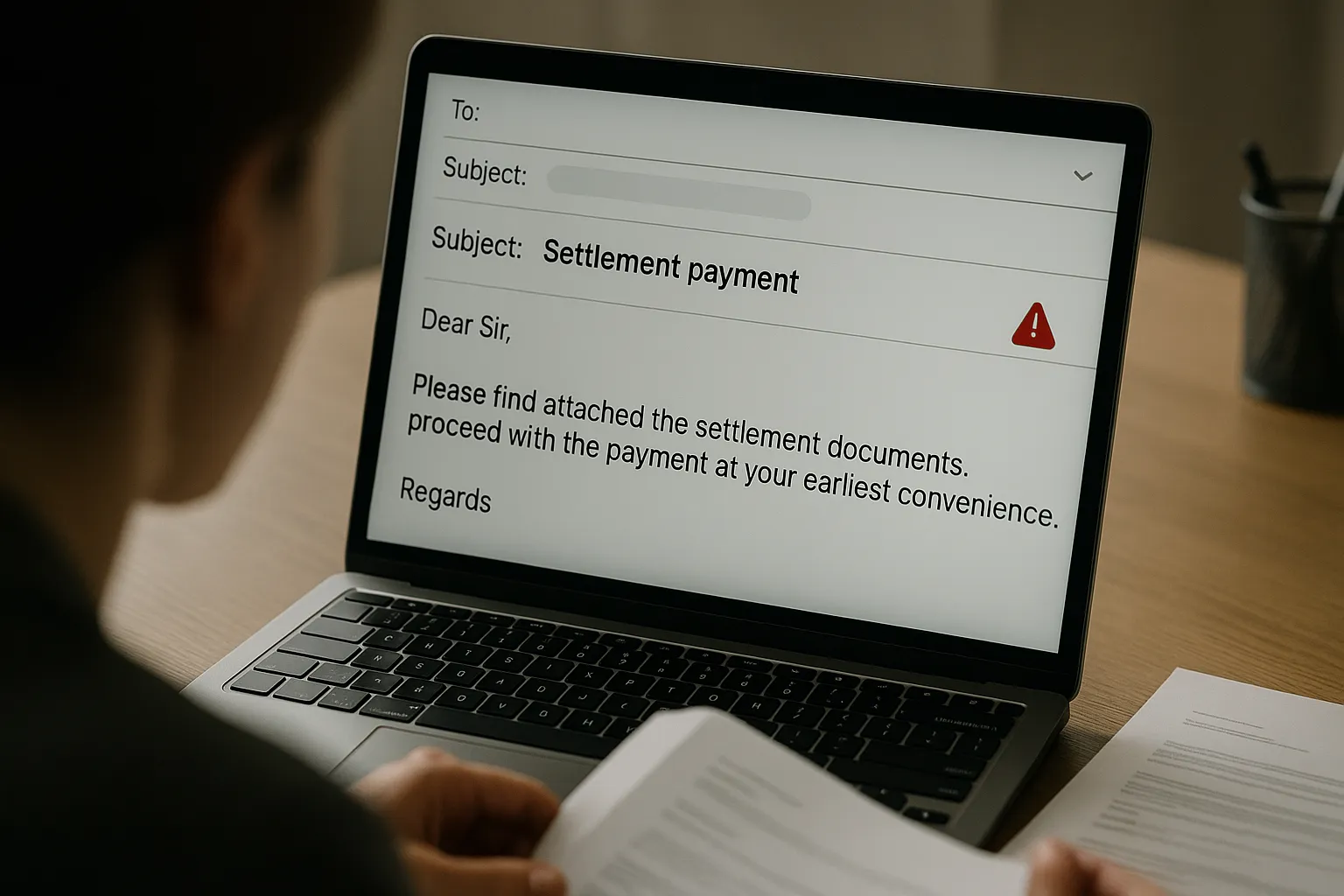
Nine in 10 Australian property buyers know settlement fraud exists. Four in 10 now think they can spot it, down from five in 10 a year earlier. That 10-percentage-point drop in detection confidence matters, because the gap between knowing a risk exists and actually catching it in real time is where the money disappears.
New research surveyed over 1,000 Australians who recently bought property or plan to buy soon. Awareness stayed high at 92%, but fewer than half felt confident identifying a scam during the transaction itself. When participants were shown a fraudulent email and told in advance it was fake, 42% still failed to flag any warning signs. Ninety-nine percent missed the spoofed sender address.
How the fraud actually works
Property settlement scams exploit trust, not software vulnerabilities. Criminals compromise email accounts belonging to conveyancers, solicitors or real estate agents, then monitor correspondence to learn transaction details and timing. At the final stage, they send payment instructions that look identical to legitimate messages, redirecting settlement funds to an account they control.
The email mimics the tone, formatting and signature block of previous correspondence. The timing aligns with the expected settlement date. The request feels urgent but not alarming. Most buyers, already stretched by what nine in 10 describe as one of the most stressful life events they face, send the money without a second verification call.
Business email compromise remains the primary vector. An emerging layer is AI-enabled voice cloning. A scammer calls claiming to be the conveyancer, using a voice sample scraped from a voicemail greeting or public video. The caller confirms details only the real professional would know, because they have been reading intercepted emails for weeks.
The catch
Awareness does not equal immunity. Knowing settlement scams exist is table stakes. The operational failure happens in the final 48 hours, when fatigue is highest, when one more email feels routine, when questioning a familiar name feels paranoid.
The research tested this directly. Participants were primed that the email was fraudulent, then asked to identify red flags. Most still missed the fake address, buried in metadata or disguised with a single-character variation like a zero instead of the letter O. Under transaction pressure, without that warning, detection rates would be lower still.
Key numbers
- 41% of buyers confident they can detect settlement scams, down from 51% the prior year
- 99% failed to spot a fake email address in a controlled test, even after being told the email was a scam
- 92% aware at least one type of property scam exists
- 42% could not identify any fraud indicators in a simulated phishing email
- 9 in 10 buyers rank property transactions among the most stressful life experiences
Risks over the next twelve months
AI voice synthesis is cheap, fast and improving. As awareness of email fraud climbs, scammers will pivot to phone calls that sound identical to the solicitor or agent the buyer has spoken to multiple times. The psychological defence against “this sounds like them” is weaker than the defence against “this email looks weird.”
Banks are rolling out Confirmation of Payee systems that flag mismatches between account names and BSB/account number combinations. Early data shows many buyers dismiss these warnings under time pressure, assuming a typo or database lag rather than fraud in progress.
Transaction volumes remain elevated despite tighter credit conditions and rising arrears in adjacent sectors. Higher deal flow means more attack surface, more rushed settlements, more opportunities for criminals to insert themselves into email threads during peak periods.
What to do before settlement day
Confirm account details in person or via a known phone number, not by replying to an email thread. Call the conveyancer’s office using the number on their original engagement letter or website, not a number included in the payment instruction email itself.
Use secure settlement tools where available. Platforms like PEXA Key allow encrypted exchange of bank details, reducing the window for email interception. Not every transaction will route through these systems, but when the option exists, take it.
Treat any last-minute change to payment instructions as a red flag requiring independent verification, even if the email looks identical to earlier correspondence and the tone matches. Scammers wait until the final hours precisely because buyers are least likely to question familiar-seeming requests at that point.
If your bank shows a Confirmation of Payee warning during the transfer, stop. Do not override the alert to meet a settlement deadline. Call your conveyancer on a verified number and confirm the account details match what they provided in writing at the start of the process.
Trade-offs in verification protocols
Adding manual verification steps slows settlements. In a market where timing matters and competing buyers move fast, asking for in-person confirmation or a callback to a verified number can feel like friction that costs the deal. That trade-off is real but skewed: the median settlement scam loss is six figures, well above the cost of a 24-hour delay or a second phone call.
Some buyers rely on their bank’s fraud detection as the last line of defence. Detection systems catch some fraud but not all, and by the time a transaction is flagged, the money may already be in an offshore account or distributed across mule networks. Prevention at the instruction stage is cheaper than recovery after the fact.
The practical next step
Before your next settlement, agree with your conveyancer on a fixed protocol for confirming payment details. Document the process in writing: how you will verify changes, which phone number you will call, whether account details will be confirmed in person or via encrypted message. Make that agreement at the start of the transaction, not the day before settlement when stress is highest and shortcuts feel reasonable.
If you receive updated payment instructions within 72 hours of settlement, pause. Call the conveyancer’s office on the number you verified at the beginning. Ask them to read back the BSB, account number and account name while you compare it to the email. If anything feels rushed or pressured, that is the moment to insist on an in-person meeting or a video call to confirm identity before releasing funds.
Subscribe to the newsletter for weekly updates on market risks, policy shifts and decision frameworks that matter when timing and capital are both on the line.
General info, not financial advice.