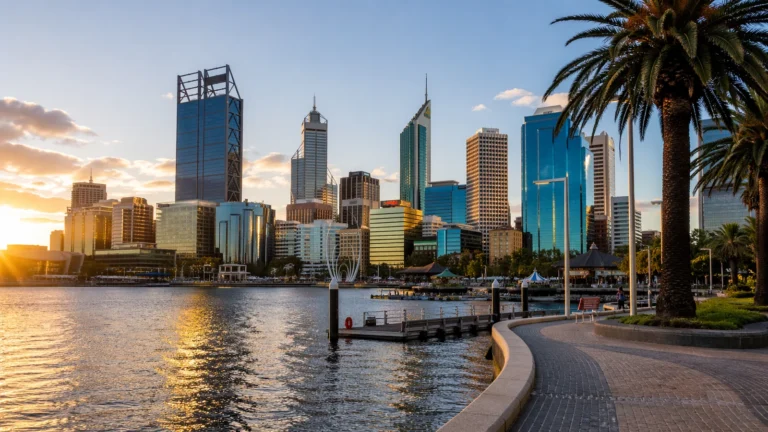
The median Perth household now hands over 47.5% of its income to service a mortgage, up from 41.2% a year ago and the steepest quarterly jump in the country. That’s not a Sydney-style affordability crisis in the making. It’s already here, quietly overtaking the eastern states’ previous peaks.
Three rate rises this year, combined with prices still climbing (the average WA mortgage grew $17,000 in three months), mean monthly repayments have spiked $300 since March and over $1,000 since mid-2025. Real Estate Institute of Australia data shows WA’s affordability deteriorated faster than any other state in the June quarter, even as New South Wales and Victoria saw slight improvements from softer prices.
The gap matters because WA’s market ran harder for longer. While Sydney and Melbourne peaked early and pulled back, Perth kept climbing, and mortgage sizes followed. The average owner-occupier loan in WA now sits at $720,012, up 16% year-on-year. First home buyers, borrowing an average $610,941, are pricing in growth that may not arrive.
The 45% threshold and what breaks first
Historically, when repayments exceed 45% of household income at scale, one of three things happens: forced selling accelerates, policy shifts to ease pressure, or demand collapses faster than supply can adjust. WA is now 2.5 percentage points past that line.
The national average sits at 50.9%, with NSW leading at 57.7%, but NSW has been above 50% for over a year and prices there are falling. WA crossed into stress territory recently and prices haven’t responded yet. That lag creates two scenarios: either the market softens soon (new listings rose in the June quarter, sales volumes ticked up 9.1% quarter-on-quarter but remain 4.7% below last year), or serviceability tightens further and buyers withdraw entirely.
Upgraders are still transacting, they made up a larger share of loans as first home buyer activity dropped from 38.4% to 35.9% of the market. That shift pushed the average loan size higher even as transaction volumes stayed relatively flat. But upgraders need equity and income headroom. Once existing owners can’t stretch, that segment stalls too.
Rental supply: static while population grew 12%
Rental affordability sits at 25% of family income, lower than mortgage stress but climbing. Median weekly house rent in Perth rose to $750 (up 1.4% over the quarter, 7.1% year-on-year). Unit rent held flat at the median but jumped 7.7% annually.
The supply side is the real constraint. Total rental stock only just returned to February 2021 levels after an 8.4% drop when investors exited. Meanwhile, WA’s population grew 12%, driven largely by overseas migration, renters by default. Vacancy rates sit at 1.9%, median time to lease is two weeks, and investor lending fell 5.1% in the June quarter as tax policy changes bit.
If rental supply contracts again, and lending data suggests it will, rents will spike harder than they did in 2023, when annual growth hit 20% for houses and 22% for units. The policy trade-off was deliberate: tax changes aimed to cool investor speculation. The unintended effect: fewer rentals entering the market exactly when migration kept demand high.
First home buyers: waiting for a fall that may not come
First home buyer loans rose 2.1% quarter-on-quarter but remain 1.8% below last year. The pullback isn’t about affordability improving, average first home buyer loan sizes are up 16.3% year-on-year. It’s about expectations.
Many are waiting for the “significant price falls” reported in eastern states media to reach Perth. The problem: WA’s market dynamics don’t mirror Sydney or Melbourne. Supply here is tighter, migration inflows are proportionally larger relative to housing stock, and the construction workforce gap (still 50,000 trades short nationally) means new builds aren’t filling the void fast enough.
That creates a timing risk. If buyers wait for a correction that doesn’t materialise, or materialises slower and shallower than expected, they’re borrowing into higher prices with the same stretched serviceability.
Policy levers and what could shift next
Two pressure points could force a policy response: mortgage stress at scale (already triggering) or rental supply collapse (building). Federal tax changes deterred investors as intended but also sidelined first home buyers who can’t compete without the equity buffer upgraders carry.
State-level responses (stamp duty concessions, shared equity schemes) help at the margins but don’t address the core constraint: not enough properties being built or held as rentals to match population growth. Rate cuts would ease repayment stress but won’t fix supply.
The base case: affordability stays tight until either prices fall (unlikely without forced selling or credit tightening) or incomes catch up (wage growth is running at 3-4%, nowhere near fast enough). The upside case: rates stabilise, listings rise further, and prices drift sideways long enough for incomes to close the gap. The downside: another rate rise or a wave of investor exits tips rental supply into freefall and repayment stress forces distressed sales.
Red flags for the next two quarters
Watch three numbers: vacancy rates (if they drop below 1.5%, rental supply is contracting again), auction clearance rates in Perth (currently holding but any sharp fall signals buyer pullback), and the proportion of loans going to first home buyers (if it drops below 30%, upgraders are the only ones transacting and the market is thinner than it looks).
If rental listings fall and investor lending stays negative, rents will spike before the end of the year. If mortgage stress pushes distressed listings higher, prices will soften, but that takes months to show in median figures, and by then serviceability damage is done.
Key numbers
- WA mortgage repayments now take 47.5% of family income, up from 41.2% a year ago, the fastest deterioration in Australia
- Average owner-occupier loan in WA: $720,012, up 16.1% year-on-year
- Median weekly house rent in Perth: $750, up 7.1% annually; units up 7.7%
- Rental vacancy rate: 1.9%, with median time to lease at two weeks
- First home buyers now 35.9% of WA loans, down from 38.4% last quarter
- Investor lending in WA fell 5.1% in the June quarter following tax policy changes
What to do if you’re deciding now
If you’re weighing a purchase: pressure-test your serviceability at 50% of income, not current repayments. Rates may stabilise but they’re not falling soon, and if prices stay flat or drift up another 5%, your deposit buys less six months from now.
If you’re renting and waiting for prices to fall: set a decision timeline. Waiting works only if the correction you’re banking on actually arrives. WA’s supply constraints and migration inflows make that less certain than in Sydney or Melbourne.
If you’re an investor spooked by tax changes: rental demand isn’t going anywhere. Vacancy rates and time-to-lease data say the same thing, supply is the binding constraint. The yield might not look as attractive after tax, but tenant demand is structural, not cyclical.
Housing affordability Australia hits record low as rate hikes erase price falls covers how the national picture compares. Migration cuts construction workforce gap: 50,000 trades short explains why supply can’t catch up quickly. First home buyer scheme hits 250,000: but did it add supply or displace it? examines whether policy is solving or shifting the affordability problem.
For weekly signals on affordability, supply and policy shifts, subscribe to the newsletter.
General info, not financial advice.