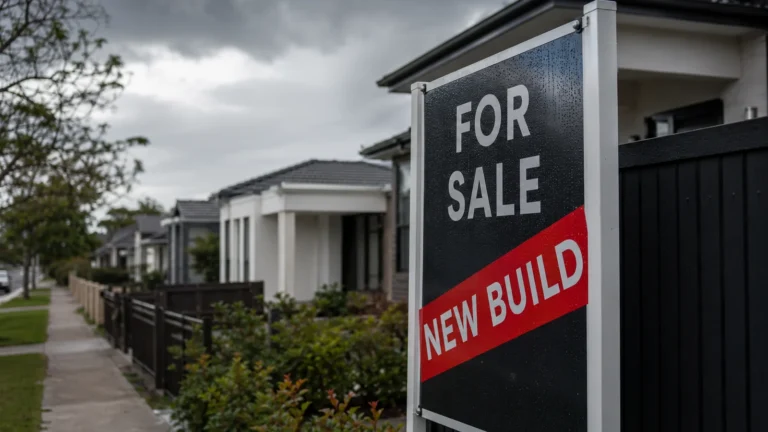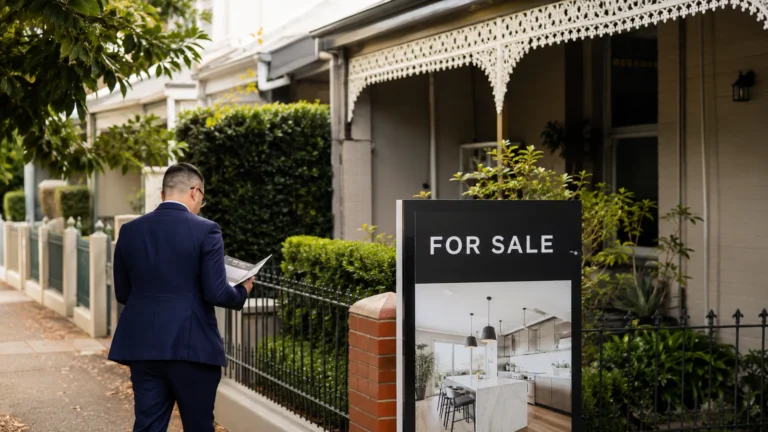
Labor’s housing tax plan was meant to do one simple thing: shift investor demand away from established homes and toward new supply.
But the hard part is now emerging. What counts as “new”?
That question sounds technical. It is not. It could decide whether an investor building a granny flat, replacing an unliveable house, converting a building, or funding a major upgrade gets treated as part of the supply solution or locked out of the tax incentive.
For property investors, the fight over negative gearing new builds is less about political theatre and more about feasibility. If the rules are too narrow, some projects that add usable housing may not stack up. If the rules are too loose, the policy risks becoming another carve-out-heavy tax system that rewards clever structuring more than genuine supply.
The fight is no longer just about negative gearing
The government’s policy direction is clear enough.
From 1 July 2027, negative gearing benefits for residential property investment are proposed to be limited to new builds. Existing arrangements are expected to remain for properties already held before the Budget night cut-off, while investors buying newly built homes would still be able to deduct rental losses against other income.
In plain English, the government wants tax support to follow extra housing supply, not more bidding on the same established homes.
That is the theory.
The practical problem is that Australia does not add housing in one neat way. Not every extra dwelling is a greenfield house-and-land package or a tower apartment bought off the plan.
Some supply comes from knocking down a tired house and replacing it with two homes. Some comes from secondary dwellings. Some comes from converting underused buildings. Some comes from major renovations that bring old stock back into usable condition.
That is where the industry argument lands: if the tax system only recognises a narrow version of “new build”, it may miss part of the supply pipeline it is meant to support.
Why the definition matters for investors
A definition can change the numbers quickly.
Take a small investor looking at an older home on a large block. One option is to rent it as-is. Another is to build a secondary dwelling, upgrade services, improve compliance and increase rental capacity.
If the extra dwelling qualifies under the new-build rules, the investor may still be able to claim rental losses against other income. That can help cashflow in the early years, especially when borrowing costs, construction costs and holding costs are high.
If it does not qualify, the same project may become harder to justify.
That does not mean every granny flat or renovation deserves tax-preferred treatment. It means the rules need to separate genuine supply from cosmetic upgrades.
Here’s the catch: a kitchen renovation is not the same as adding a second legal dwelling. A knock-down rebuild that replaces one dwelling with one dwelling is not the same as replacing one dwelling with two. A luxury upgrade can improve quality without improving affordability.
That is why the Senate stage matters. The debate is moving from slogan to mechanics.
In plain English
The key question is not whether investors should get a tax break.
The key question is whether the tax break should follow only brand-new dwellings, or also projects that materially increase usable housing supply.
For investors, the answer affects cashflow, feasibility and timing. For renters, it affects whether more homes actually reach the market. For policymakers, it affects whether the reform changes supply or just changes which buyers compete for which properties.
The supply argument is stronger in established suburbs
The industry’s strongest case is in established suburbs where new housing is difficult to deliver.
In many middle-ring areas, the land is already held, the infrastructure already exists and large-scale density can be slow to approve. In those markets, smaller additions can matter: a secondary dwelling, a dual-occupancy project, a knock-down rebuild, or a conversion of non-residential space into housing.
These projects are not always glamorous. They often do not make headlines. But they can add rental options faster than major precinct redevelopment.
That matters because Australia’s housing shortfall is not just a future problem. Australian Property Review has previously covered the scale of the supply gap in Australia Is Short 262,000 Homes. Will Prices Surge Again?
The important point is simple: a shortage can support prices while still leaving renters and buyers under pressure.
If the policy excludes too much of the small-scale supply channel, it may lean heavily on apartment projects and greenfield construction at the exact time feasibility is already under pressure from rates, labour costs, materials and planning delays.
The other side of the argument
There is a reason governments try to keep definitions tight.
Once a tax concession is opened to renovations, the line can get blurry. A second bathroom? A new roof? A rebuild with no extra dwelling? A high-end renovation that lifts rent but does not add capacity?
The wider the definition, the more the tax office needs to police intent, building scope, approvals and rental use. That adds complexity.
It also creates fairness questions. If an investor receives tax support for a major upgrade, but an owner-occupier making the same improvement does not, the government will need to explain why that investment deserves special treatment.
So the policy choice is not simple.
A narrow rule is cleaner but may miss real supply. A broad rule is more flexible but harder to administer. The better answer is likely a test based on measurable housing outcomes, not renovation labels.
For example, the strongest case would be projects that create a separate legal dwelling, restore an uninhabitable property to rental use, or convert non-residential space into compliant housing. The weaker case would be upgrades that mainly improve finish, rent level or resale value without adding effective supply.
What investors should watch before making a move
Investors should avoid treating the proposed rules as settled strategy.
The legislation, regulations and tax office guidance will matter more than political talking points. The detail could decide whether a project qualifies, when it qualifies, and what evidence an investor needs to keep.
Now, the part most people miss: tax treatment is only one input. A project can qualify for better tax treatment and still be a poor investment if construction costs blow out, rent assumptions are too optimistic, approvals drag on, or resale demand is thin.
Australian Property Review has already explained why tax settings and cashflow cannot be viewed separately in Landlords face budget squeeze as tax reform looms. Negative gearing affects the holding period. Capital gains tax affects the exit. Serviceability affects whether the investor can fund the project in the first place.
That is why investors should pressure-test three numbers before relying on any tax benefit:
First, the project’s cashflow without the tax benefit.
Second, the rent needed to cover higher borrowing and construction costs.
Third, the exit value if buyer demand weakens or the tax rules change again.
If the deal only works because of a political definition that has not been finalised, the margin of safety is thin.
The market impact could cut both ways
If Labor holds a narrow definition of new builds, investor demand may concentrate in new apartments, house-and-land packages and developer stock.
That could support selected projects, particularly where pricing, yields and settlement risk are acceptable. But it may also increase competition between investors and first-home buyers in the same new-build segment.
Australian Property Review covered that tension in Negative Gearing Reform: Greens Raise Price of Labor Deal, where the policy direction was framed as an attempt to redirect capital into supply rather than established housing.
If the definition expands, more small-scale projects may become viable. That could help supply at the margin, especially in established suburbs. But it could also reduce the policy’s simplicity and create more disputes over eligibility.
There is no perfect version of this reform. There are only trade-offs.
The base case is that the government keeps the headline policy but is forced to sharpen the rules around what counts as new housing. The upside case is a practical definition that rewards genuine added dwellings and conversions. The downside case is a messy compromise that leaves investors unsure, builders frustrated and renters waiting for supply that arrives too slowly.
The practical take
For property investors, the immediate move is not to rush into a granny flat, duplex or knock-down rebuild because it might qualify.
Start with evidence.
Ask whether the project creates a separate legal dwelling, increases the number of rentable homes, restores unusable stock, or only improves the quality of an existing asset. Then ask a tax adviser how the proposed rules may apply once the final legislation and guidance are settled.
A simple rule of thumb: if the project does not add a genuine housing outcome, do not assume the tax system will treat it as supply.
The bigger lesson is that policy headlines are not enough. In property, the money is often made or lost in definitions, timing and cashflow.
For now, negative gearing new builds remains a moving target. Investors should watch the Senate process, the final definition of “new housing”, and any guidance on secondary dwellings, conversions and major renovations.
Start here: pressure-test the deal without the tax benefit first. If it still works, the policy upside is a bonus, not the foundation.
Want the weekly signal without the noise? Subscribe to the free Australian Property Review newsletter
General info, not financial advice.