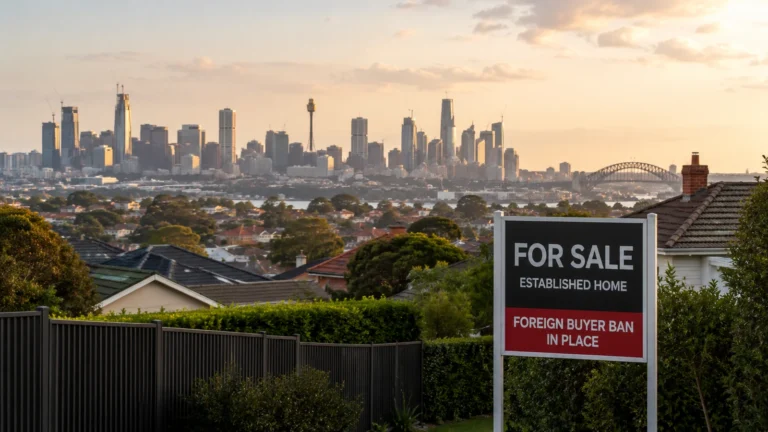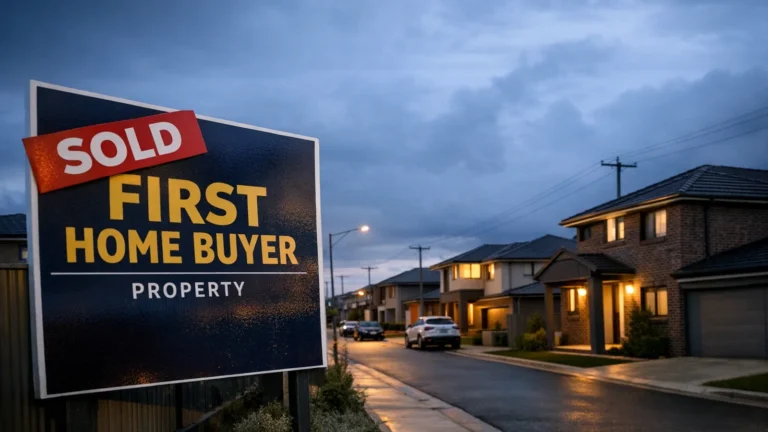
Foreign buyer ban rules are now set to stay in place for longer, giving the federal government a simple housing message: established homes should be easier for locals to buy.
That will land with frustrated buyers.
But the harder question is not whether the rule sounds fair. It is whether it changes the affordability equation in a market still short of homes, tight on rentals and heavily shaped by interest rates.
The Australian Taxation Office says foreign persons are banned from purchasing established dwellings in Australia from 1 April 2025 to 30 June 2029, with limited exceptions.
That is a long enough window to matter.
It also means buyers, investors and developers need to separate the politics from the mechanics.
The rule is simple. The result is not
The policy targets established dwellings.
In plain English, that means homes that already exist, rather than new housing that adds to supply.
The logic is easy to follow. If Australia has a housing shortage, established homes should not be treated as a global bidding field. Local buyers are already dealing with higher repayments, larger deposits, strict serviceability tests and thin choice in many suburbs.
Removing some foreign demand may reduce competition at the margin.
That matters because property prices are often set at the margin. One extra bidder at auction can push a result above a buyer’s limit. One missing bidder can sometimes change the outcome.
But there is a catch.
A foreign buyer ban does not create an extra dwelling. It changes who can compete for part of the existing stock.
That distinction is the whole story.
Why established homes are the target
Foreign investment rules have long tried to push offshore capital towards new housing rather than existing homes.
The policy reason is straightforward. Buying an existing home generally transfers ownership. Funding new housing can add stock.
That is why the ban focuses on established dwellings while leaving room for foreign investment that supports new supply, subject to the rules and approvals that apply.
This is also why the policy has two different audiences.
For local buyers, it is pitched as a fairness measure. Fewer foreign buyers in the established market should mean less competition for existing homes.
For developers, the message is different. Foreign capital is still meant to be useful where it helps projects stack up and increases housing supply.
On paper, that balance makes sense.
In the real market, the line is messier.
New apartments, house-and-land packages and established homes do not always serve the same buyer. A first-home buyer chasing an older unit near work is not necessarily competing for the same property as a foreign investor looking at a new project. A downsizer looking for a low-maintenance established home is not always a buyer for off-the-plan stock.
So the ban may help in some locations and barely register in others.
Quick take
The foreign buyer ban may reduce competition for some established homes, especially where offshore demand was active. But affordability will still be driven by supply, interest rates, wages, borrowing capacity, construction costs and how quickly new homes are completed.
The affordability promise has limits
The strongest case for the ban is that housing has become too hard to access for people already living and working in Australia.
That is not a fringe concern.
Buyers are stretching deposits for longer. Some households are delaying children, staying in rentals, moving further from work or taking on repayment risk that would have looked aggressive a decade ago.
In that environment, a policy that says “locals first for existing homes” has obvious political appeal.
But affordability does not improve just because one buyer group is restricted.
Prices can still rise if local demand remains strong, listings are tight and borrowing conditions improve. If the RBA cuts rates, lenders become more comfortable and buyer confidence lifts, the absence of some foreign bidders may not be enough to stop price pressure in suburbs with limited stock.
Australian Property Review has already examined the broader supply problem in Foreign Buyer Ban: Affordability Fix Or Supply Trap? The same issue sits underneath this update: a demand rule can only do so much when the physical shortage remains.
The blunt version is this.
If ten serious buyers become nine serious buyers, the market may cool a little.
If there are still only three suitable homes for sale, affordability has not been fixed.
The supply side still decides the cycle
The housing market is shaped by several moving parts.
The foreign buyer ban affects one part of demand for established homes. It does not directly solve planning delays, infrastructure bottlenecks, high building costs, builder capacity, labour shortages, finance hurdles or low project feasibility.
Those are the constraints that determine whether Australia actually gets more homes.
This is where the second-order effect matters.
If foreign capital is redirected into new dwellings, the policy could support supply. That would be the upside case. It reduces competition for established homes while keeping investment flowing into construction.
But if investors, local or foreign, become less willing to fund new projects because costs are too high or sales are too uncertain, the supply pipeline can still weaken.
A project does not get built because policy wants more homes.
It gets built when the numbers work.
Developers need land, approvals, finance, buyers, construction capacity and a sale price that covers risk. If any part of that chain breaks, supply slows.
That is why housing affordability is rarely fixed by one clean announcement.
Who is most likely to notice the change?
The policy is most likely to matter in markets where foreign demand for established homes was a real competitor.
That may include some inner-city apartments, prestige locations, university-linked suburbs and areas popular with temporary residents.
Even there, the result may be less dramatic than the headline suggests.
A local buyer may face fewer competing bids. That does not guarantee a lower price. It may simply mean the property sells with slightly less heat.
In outer-suburban family markets, the bigger forces are likely to be local wages, borrowing capacity, school zones, transport, listings, land release and construction costs.
In regional markets, the effect may be even more uneven. Some locations have little foreign buyer activity in established homes. Others may feel indirect effects through migration, rental demand or investor sentiment.
The rule of thumb is simple: the ban matters most where the restricted buyer group was genuinely active.
Everywhere else, it is background noise compared with credit, supply and local demand.
Investors should watch the new-build channel
For investors, the foreign buyer ban should not be read in isolation.
It sits beside a wider policy shift that favours new supply over established housing.
Australian Property Review has covered how housing tax changes are raising supply concerns and why negative gearing changes may affect small landlords and rents. The common thread is that governments are trying to redirect capital, not just tax it or block it.
That creates a different kind of market risk.
If investors are pushed away from established homes and towards new builds, demand may rise for off-the-plan apartments, growth-corridor townhouses and house-and-land packages.
That may help some projects get funded.
It may also put investors and first-home buyers into the same price bands, especially in lower-entry new housing markets.
Now, the part most people miss: a policy benefit does not turn a weak asset into a good one.
A new dwelling still needs tenant demand, a realistic rent, manageable strata or maintenance costs, a cashflow buffer and a resale market that is not dependent on the next grant, tax rule or incentive.
Do not buy the policy setting. Buy the underlying demand.
The risks that could weaken the policy
There are three risks to watch.
The first is that the ban has only a modest effect because foreign purchases of established homes were not the main driver of price growth in many markets.
That does not make the policy useless. It just means expectations need to be realistic.
The second risk is leakage into new-build competition. If more capital chases a limited pool of suitable new dwellings, the policy may support construction in some places while lifting competition in others.
The third risk is that supply delivery remains too slow.
Australia does not need more announcements as much as it needs completed homes in places people can live, work and commute from.
Approvals matter. Starts matter more. Completions matter most.
If new supply remains constrained, any affordability gain from the ban could be absorbed by local demand, lower rates or stronger wages.
What buyers should do now
If you are buying an established home, do not assume the foreign buyer ban changes your budget.
Start with the numbers your lender will actually use. Then check the local market.
Look at comparable sales from the past 60 to 90 days. Watch days on market. Check auction depth. Ask whether stock is rising or falling in your target suburb. If you are stretching, model repayments at a higher rate than your current approval.
The practical test is not whether the policy sounds helpful.
It is whether your target suburb is actually becoming less competitive.
If you are an investor, pressure-test any new-build purchase without relying on tax treatment or policy momentum. The property still needs demand, yield, tenant depth and resale appeal.
If you are a developer or property professional, the key signal is whether foreign capital keeps supporting projects that add net housing supply.
That is where this policy either becomes a useful nudge or another housing headline with limited practical impact.
Bottom line
The foreign buyer ban is politically powerful because it is easy to explain.
Local buyers get priority for established homes. Foreign capital is steered towards new supply. The message is clean.
The market is not.
Affordability will still depend on the harder variables: interest rates, wages, serviceability, listings, planning, construction costs and completed housing supply.
The base case is that the ban helps some local buyers at the margin, especially in selected established-home markets. The upside case is that foreign capital continues to support new supply while competition for existing homes eases. The downside case is that the policy delivers a visible fairness win but only a small affordability gain.
Start here: before changing your buying strategy, check whether your target suburb is actually showing less competition, not just more policy noise.
Get independent property analysis without the sales pitch. Subscribe to the free Australian Property Review newsletter.
General info, not financial advice.