Data centre housing supply tensions have moved from abstract planning debate to a live test case in Geelong.
The issue is not whether data centres matter. They do. Cloud storage, artificial intelligence, banking systems, government services and everyday digital life all need physical infrastructure somewhere.
The sharper question is whether that infrastructure should sit on land already marked for housing.
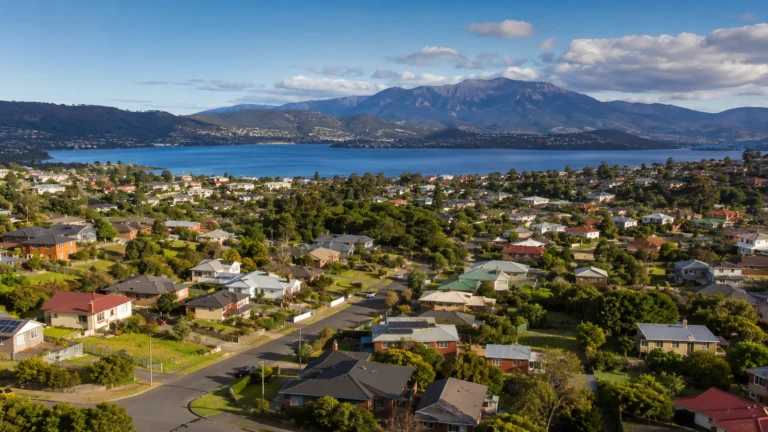
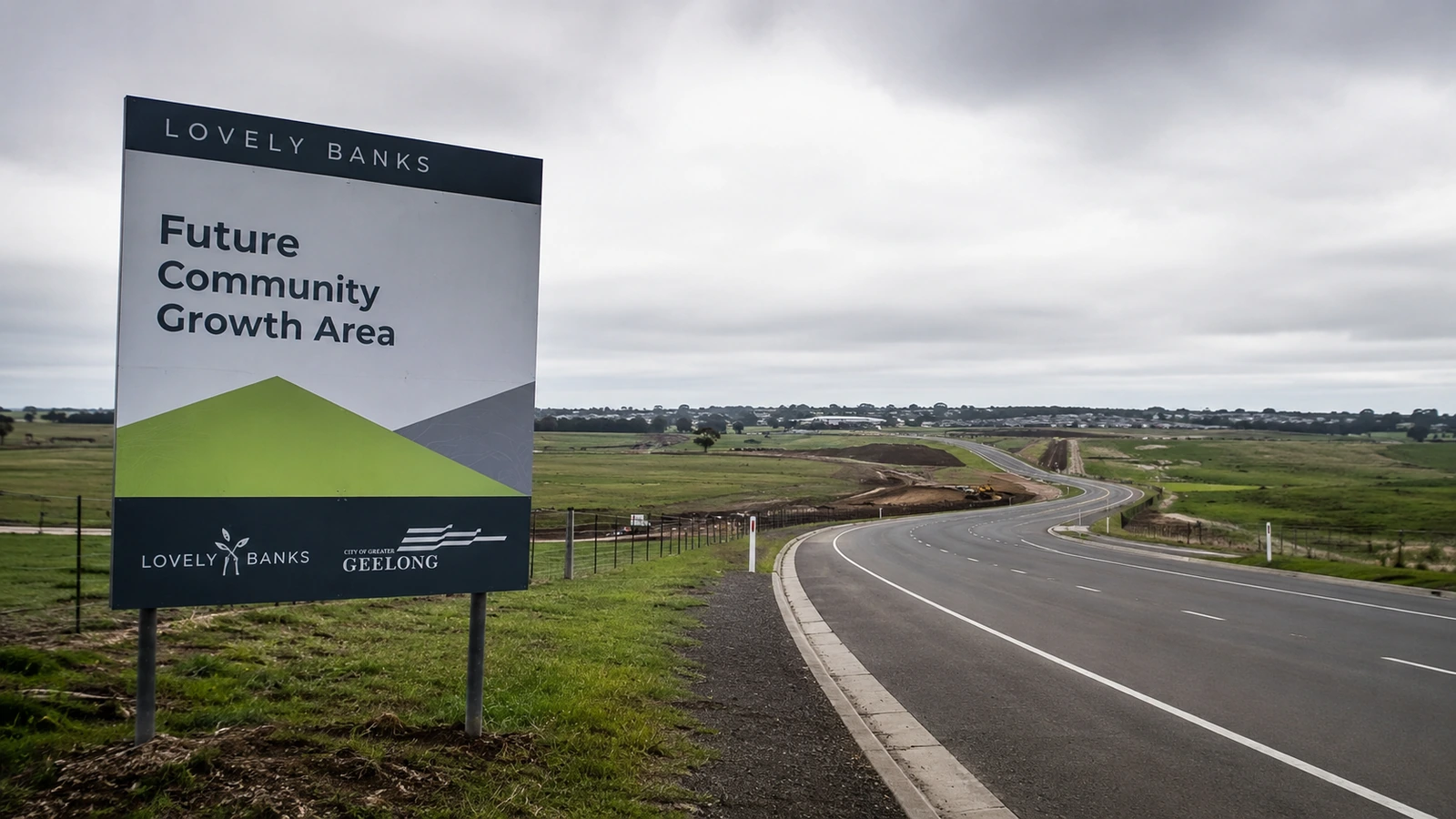
That is the fight now forming around Lovely Banks, north-west of Geelong, where HIA Victoria has warned that a major data centre push could remove land that had been expected to help deliver new homes in one of Victoria’s growth corridors.
For property investors, this is not just a local planning story. It is a reminder that housing supply risk is no longer only about interest rates, construction costs or council delays. Competing infrastructure demand is becoming part of the equation.
The Geelong land clash
The Housing Industry Association has raised concerns about NextDC’s acquisition of a large Lovely Banks landholding.
According to public reporting, the site is around 170ha, with roughly 120ha earmarked for residential use. HIA says converting that land to non-residential use could remove about 2,000 potential homes from the future supply pipeline.
That number matters, but the second-order effect matters more.
New housing estates do not work as isolated blocks of land. They rely on a web of roads, drainage, schools, parks, retail, transport links and community facilities. Much of that is funded or supported through development infrastructure contributions.
In plain English: when homes are built, developers often pay charges that help fund the local infrastructure needed to support those homes.
If residential land becomes a data centre instead, the housing numbers change. So can the funding model around the suburb.
That is why this is bigger than one site.
It raises a planning question Victoria has not fully settled: how should governments balance digital infrastructure with housing targets when both want access to the same well-serviced land?
Why this is happening now
Data centres need three things that are also valuable to housing growth areas: land, power and access.
Lovely Banks has strategic appeal because it sits near major infrastructure. That can make it attractive for large-scale digital use, especially when energy supply and grid connection are critical.
But that same infrastructure is also why growth corridors are planned for housing.
This is the catch. Good infrastructure attracts more than one buyer.
A farmer’s paddock on the urban fringe is not just a paddock once the planning system starts treating it as future suburbia. It becomes a contest between the highest-value future use. Sometimes that is housing. Sometimes it is logistics. Increasingly, it may be digital infrastructure.
That creates a hard trade-off for governments.
Data centres can support jobs, technology investment and business services. They can also use large sites, draw on energy and water networks, and reshape the economics of planned communities.
Housing policy often assumes the pipeline is there once land is identified. Investors should be careful with that assumption.
A planned housing area is not the same as delivered housing.
Key numbers
The reported figures around Lovely Banks point to the scale of the trade-off:
- Around 170ha reportedly acquired by NextDC.
- About 120ha described as land earmarked for residential use.
- Roughly 2,000 potential homes flagged by HIA as at risk if the land shifts away from housing.
- Lovely Banks has been promoted as a future community of more than 15,000 homes.
- Geelong’s northern growth areas are expected to carry a meaningful share of future dwelling supply.
The numbers are not final approvals. They are planning assumptions and industry estimates.
But that is exactly why investors should pay attention. Housing markets often move on expectations before supply appears on the ground.
What changed and what did not
What changed is the pressure on land use.
A data centre is not a shopping centre or a regular industrial shed. It is a capital-heavy piece of digital infrastructure with strong demand behind it. As artificial intelligence and cloud services expand, sites near power and fibre become more valuable.
That can pull land away from housing if planning rules allow it.
What did not change is Victoria’s housing shortage.
The state still needs more dwellings, faster approvals and a construction sector that can deliver stock at viable prices. Losing even a few thousand potential homes will not decide the whole market by itself, but it can worsen pressure in a corridor already expected to absorb future population growth.
For investors, the lesson is simple: do not treat future supply as guaranteed just because a suburb sits inside a growth plan.
A supply pipeline can shrink, slow or shift.
The investor angle most people will miss
At first glance, less housing supply sounds good for investors who already own property nearby. Fewer new homes can support prices and rents if demand holds up.
But that is only the first reading.
The second reading is messier.
If a large planned estate loses housing lots, the suburb may also lose scale. That can affect the timing and viability of shops, roads, schools, buses and community facilities. A smaller housing base can mean a slower rollout of amenity.
That matters for rental demand, resale appeal and long-term liveability.
A new suburb is not valuable simply because houses exist. It becomes investable when services, transport, schools and employment access catch up.
So the trade-off is not “fewer homes equals better capital growth”.
It is more like this:
- Existing owners may benefit from tighter supply.
- Future buyers may face fewer affordable entry points.
- Renters may face more pressure if supply is delayed.
- Developers may need to rework infrastructure and staging assumptions.
- Nearby investors may need to reassess amenity timelines.
That is the uncomfortable part. Supply constraints can lift values in one column and damage suburb quality in another.
Why infrastructure contributions matter
Infrastructure contributions sound technical, but they are central to the economics of new suburbs.
When land is developed for housing, the contribution system helps fund the infrastructure that makes that housing functional. Roads, drainage, open space and local services do not appear for free.
If a major residential parcel is removed, the expected contribution base can change.
That can create three risks.
First, the remaining homes may carry more of the cost burden.
Second, some infrastructure may be delayed or redesigned.
Third, the local growth plan may no longer match the original population assumptions.
None of that means the Lovely Banks outcome is settled. It does mean the planning decision needs to look beyond the boundary of one site.
For readers tracking this issue, the useful question is not only “will the data centre be approved?”
The better question is “what happens to the surrounding suburb if it is?”
A policy problem with no clean answer
This is where the politics gets difficult.
Victoria wants more homes. It also wants investment in future industries. Data centres sit in that second bucket.
A serious government cannot dismiss digital infrastructure as optional. The economy increasingly depends on it.
But a serious housing policy cannot allow residential land to be quietly chipped away whenever another use can pay more.
That is the planning tension.
The base case is that governments will try to support both, with tighter assessment of where data centres belong.
The upside case is that Victoria develops a clearer framework that directs data centres towards sites with power access but lower housing conflict.
The downside case is a fragmented approval pattern where growth corridors lose housing capacity site by site, while councils and developers are left to manage the consequences.
For investors, the risk is not only one approval. It is precedent.
Read more from Australian Property Review
For a wider view of how supply constraints affect prices, read Australian Property Review’s analysis of the 2026 property forecast.
For the tax and policy side of the supply debate, see NSW foreign investment waiver: supply fix or tax gamble?
For another look at how zoning and infrastructure can change housing outcomes, read Grattan Institute Pushes Zoning Overhaul Aimed at $100k Housing Price Drop.
What to watch next
The next step is not to assume the data centre proceeds or fails.
Watch for four things.
First, whether a formal planning application is lodged for the Lovely Banks site.
Second, whether the Victorian Government treats the proposal as a normal planning matter or channels it through a faster pathway.
Third, whether Greater Geelong pushes for a broader data centre framework rather than site-by-site decisions.
Fourth, whether developers in the northern growth corridor revise housing, infrastructure or staging plans.
That is where the market signal will show up.
A single land sale does not rewrite Geelong’s property outlook. But it does expose a bigger issue for Australian housing: land planned for homes is now competing with infrastructure that can pay institutional prices.
If you’re thinking “okay, but what should I do?”, start here: pressure-test any growth-corridor investment on delivered infrastructure, not just future masterplans.
Plans are useful. Completed roads, schools, shops and services are better.
Subscribe to the free Australian Property Review newsletter: newsletter.apreview.com.au
General info, not financial advice.