A cross-industry analysis covering more than seven million Australian properties has quantified how much buyers will pay for lower running costs. The numbers are concrete: solar installations correlate with a 2.7% price lift on average, while each additional star on the Nationwide House Energy Rating Scheme (NatHERS) scale links to roughly 1.3% higher sale prices nationally.
But the premium isn’t uniform, and the gap between best-case and typical outcomes is wide enough to matter if you’re deciding what to spend on next.
Where the pricing power shows up
The research, conducted by a property data firm and a national industry body, draws on transaction records, not surveys. Two case studies illustrate the upper end: a four-bedroom off-grid home in regional Tasmania sold 66% above the local median for comparable properties, while a 7.5-star townhouse in inner Perth traded 22% over the townhouse benchmark in the same suburb.
Those aren’t typical margins, they reflect properties built or renovated specifically for energy performance, marketed to buyers who prioritise it, in postcodes where the premium can be captured. The broader dataset shows more modest but consistent lift: households with rooftop solar achieve a 2.7% average premium, and properties rated above the established-housing norm (most older homes sit below four stars; new builds now require seven) see incremental gains per star.
The catch
The premium depends on disclosure. If a buyer can’t verify the rating or compare running costs, the efficiency advantage stays invisible and the price stays flat. Until recently, NatHERS ratings applied only to new construction, existing homes had no standardised score at sale. That’s changing: the scheme now covers established properties, and every state has committed to mandatory energy-performance disclosure at point of sale or lease. But rollout is still underway, and until disclosure becomes routine, the pricing signal will remain patchy.
What’s driving the shift
Three things are converging: energy costs that haven’t meaningfully eased since 2022, a national building standard that makes seven-star performance the baseline for new stock (raising the bar for what counts as “good”), and a wave of owner spending on retrofits. One survey cited in the research estimates households plan to deploy over $85 billion on energy-efficiency upgrades across the next five years.
That spending intent reflects real behaviour change: a retail lender reported its green-loan book doubled in twelve months, and 85% of surveyed Australians said they’d prefer a home with renewable technology already installed over one without.
The regulatory shift matters, too. Mandatory disclosure creates a level playing field, once every listing carries a rating, buyers can compare directly, and sellers have an incentive to invest before listing rather than leave performance gains uncaptured.
Who wins and who doesn’t
Properties that capture the premium tend to share three traits: verifiable performance data (a formal rating or documented solar output), a location where buyers have disposable income to pay for future savings, and a sale process where the efficiency story gets told clearly.
Properties that don’t: older stock in postcodes where price sensitivity dominates, homes with partial upgrades (e.g. solar but poor insulation) that don’t shift the overall rating, and listings where the agent doesn’t know how to communicate the performance advantage or the buyer can’t verify it.
The income and location filter is real. A retrofit that costs $15,000 and saves $1,200 per year in energy bills will appeal to a buyer who can afford the upfront or finance it easily, less so to a stretched first-timer prioritising repayment capacity over running costs.
Renovation return ranking
The research doesn’t break out cost-per-improvement, but the premium hierarchy is visible: solar panels (widely recognised, easy to verify via inverter data) command the clearest lift, followed by meaningful insulation and glazing upgrades that push a property across a star threshold. Cosmetic energy touches, a single LED downlight swap or low-flow showerhead, won’t move the rating or the price.
If you’re renovating to sell within two years, prioritise what a buyer can see on a rating certificate or electricity bill: rooftop solar with battery storage if budget allows, ceiling and wall insulation if the house currently has none, double-glazing in climate zones where heating and cooling costs are high. Skip partial measures that don’t shift the star rating, the market pays for verified performance, not good intentions.
For investors holding long-term, the calculus shifts: lower running costs reduce tenant turnover (renters stay longer when bills are manageable) and justify higher asking rents in markets where tenants compare total occupancy cost, not just weekly rent. A non-bank lender’s experience shows demand is concentrating in properties where the efficiency infrastructure is already in place, rather than buyers planning to retrofit post-purchase.
Trade-offs and risks
The 1.3% per-star figure is a national average, which means it includes markets where the premium is zero and others where it’s multiples higher. You can’t assume the average applies to your postcode, check recent comparable sales and ask whether buyers in your area are paying for ratings or ignoring them.
Second risk: retrofit costs can exceed the capitalised premium. If a $20,000 solar-and-insulation package lifts your sale price by $15,000, you’ve lost $5,000 unless the running-cost savings during your ownership period make up the gap. Model both the sale-price lift and the bill reduction, and don’t assume one pays for the other.
Third: the regulatory timeline is still uneven. Disclosure mandates are coming, but until they’re live in your state and enforced at every sale, the market will underprice efficiency because buyers can’t easily compare it. If you’re renovating now to sell in 2027, you’re betting disclosure will be routine by then, reasonable in some states, uncertain in others.
Scenarios over the next two years
Base case: disclosure becomes standard in most capital cities by mid-2027, the premium on high-rated stock widens slightly as the comparison becomes routine, and the seven-star new-build standard makes four-star older homes look incrementally worse. Renovation spend stays elevated, solar uptake continues, and the gap between rated and unrated stock grows.
Upside: energy costs spike again (offshore supply shock, domestic generation shortfall), making the running-cost advantage more tangible, or federal incentives for retrofits lower the upfront cost enough to shift the cost-benefit for middle-income owners. The premium could double in high-cost postcodes.
Downside: a sharp economic slowdown pushes buyers to prioritise purchase price over future savings, the premium compresses, and retrofit spending stalls. Disclosure rollout is delayed or poorly enforced, leaving the market without a clear signal.
What to prioritise if you’re upgrading or buying
If you’re renovating to sell: get a pre-upgrade NatHERS assessment, identify what would push the rating up by at least one full star, and spend there first. Solar is the most legible upgrade to buyers, but if your house is uninsulated, that’s the higher-return fix. Budget $10,000–$25,000 for a meaningful lift, and list with the rating certificate and 12-month energy bills as part of the marketing.
If you’re buying: ask for the NatHERS rating or request one as a condition (it’s now available for existing homes). Compare running-cost estimates across shortlisted properties, a $50/week difference in bills is $2,600/year, which over a seven-year hold equals $18,200 in real cash you either spend or save. Price that into your offer, and if a property has solar or high insulation but the asking price doesn’t reflect it, you’ve found an underpriced asset.
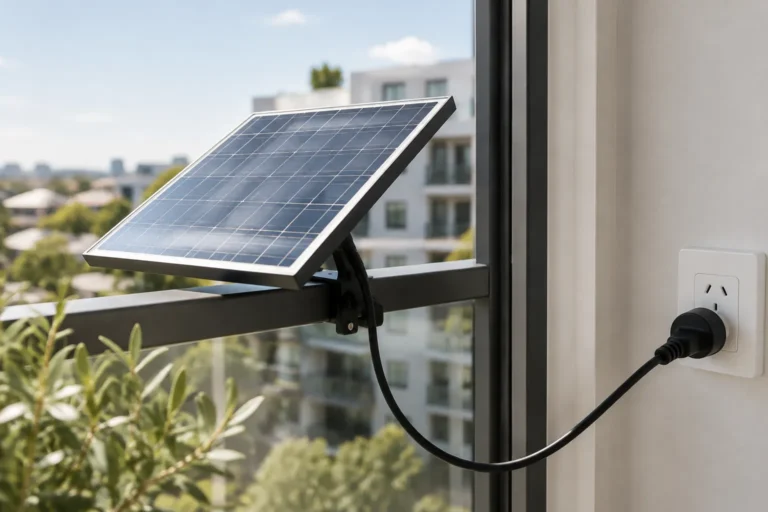
If you’re holding an investment property, plug-in solar options renters can install themselves are shifting the calculus on who pays for upgrades, worth understanding if you’re weighing capex now versus tenant retention later.
Start here: check whether your state’s disclosure mandate is live yet (most are phasing in through 2026–2027), and if you’re planning any renovation spend in the next 12 months, get a NatHERS assessment before you commit the budget. Subscribe to the newsletter for the next efficiency-pricing update.
General info, not financial advice.