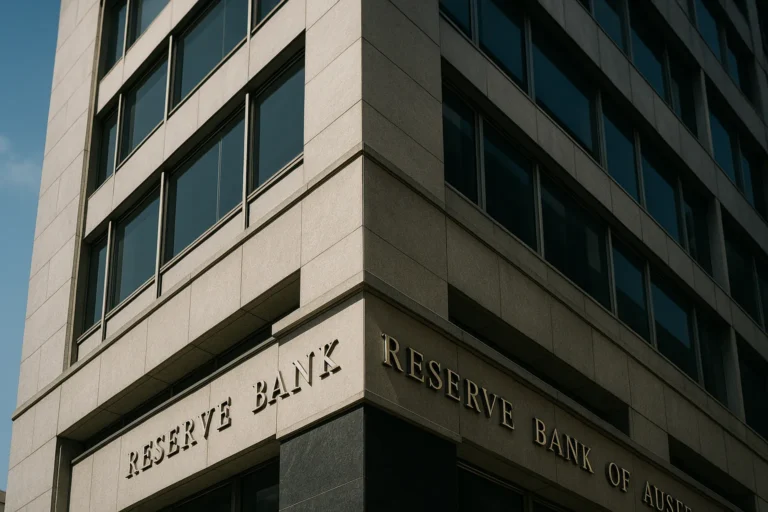
One major bank now says the last rate rise of this cycle has already happened. Its chief economist put that view to clients on 13 November 2026, arguing the cash rate will sit still through 2027. The Reserve Bank of Australia has not said the same thing, and that gap matters more than the headline.
A peak call from one economist, not the RBA
The forecast is clear. The economist expects no move in 2027, with a February increase unlikely but not impossible. Only a big new inflation surprise or a policy mistake would bring one on. The RBA board itself voted 6-3 to hold at its latest meeting, and its governor talked about taking stock. She pointed to capacity strain in the domestic economy rather than oil as the pressure point. That is a pause with a caveat, not a promise.
Three signals behind the cash rate peak view
The economist’s case rests on three things:
- Housing is soft. Mortgage inquiries fell again in October, and housing has missed projections two months running.
- Consumers are tiring. Card data points to weaker discretionary spending in the December quarter as fixed-rate protection, pandemic savings and strong hiring stop cushioning households.
- Oil has dropped. Brent crude is down roughly a quarter on a dated basis since 28 October, when the RBA finalised its projections, and about 15% on a spot basis.
Business forward orders have also weakened. On this reading, inflation looks more like a non-labour cost shock than a wages spiral. The bank now sees unemployment peaking above 5%, cuts its 2027 growth and jobs forecasts, and expects underlying inflation to ease within the 2-3% band.
Key numbers
- 13 November 2026: date of the peak-rate call
- 6-3: the RBA board’s vote to hold
- Unemployment forecast to peak above 5%
- Brent crude down about 15% (spot) since 28 October
Why a pause is not a repair
Here is the catch. A pause stops new rate pain from arriving. It does not undo the rises already in the system, and mortgage stress runs on a lag. Households that have been absorbing higher repayments, drawing down savings and cutting spending can still fall behind after the central bank stops moving.
That is the pattern we flagged when 44 banks passed on the latest RBA hike: the repayment shock lands first, and arrears show up months later. The same logic applies to a softer jobs market. If unemployment does climb above 5%, the borrowers most at risk are those who were already stretched when rates were rising. A flat cash rate gives them no relief on the balance they already owe. It only stops the bill growing.
Sentiment tells a similar story. Our look at mortgage arrears risk as sentiment hit a four-year low showed how household mood can sour well before official arrears data catches up. A peak in the cash rate does not reset that mood on its own.
Lending rules keep the door half shut
There is a second lag. Lower prices are supposed to help buyers, but affordability is more than the sticker price. We covered this in housing affordability getting worse even as prices fall. When lenders still apply tough serviceability buffers, a smaller price tag can be cancelled out by a smaller borrowing limit.
The same barrier traps existing borrowers who want a better deal. As mortgage prisoners and bank stress tests explains, a borrower who cannot pass a fresh assessment cannot move to a cheaper loan, even if rates stop rising. Lending standards are a policy and bank-risk setting, not a rate setting. They do not loosen just because the RBA sits on its hands.
What the economist’s case leaves out
The forecast leans on weaker demand and cheaper oil. Both can reverse. The RBA governor pointed to domestic capacity strain, which suggests the board is not treating oil as the main driver. If inflation proves stickier at home than the bank assumes, a February move is not off the table.
It is also worth separating two questions. Has the cash rate peaked? That is a forecast, and it may well be right. Has the pressure on borrowers peaked? That is a different question, and the lags in arrears and lending standards suggest the answer is not yet.
Scenarios from here
- Base case: the RBA holds through 2027, inflation drifts back into the 2-3% band, and arrears rise slowly rather than sharply.
- Downside: unemployment overshoots 5%, spending weakens further, and arrears climb faster than the cash rate pause can offset.
- Upside: wage growth stays contained, repayments feel steadier, and lenders ease off gradually as risk fades.
December’s RBA meeting is the next test of whether the peak call holds.
One practical step: check how much room your household has if repayments stay where they are and income dips. A flat cash rate is only good news if the budget still balances at today’s rate. For the weekly signal, subscribe to the Australian Property Review newsletter.
General info, not financial advice.