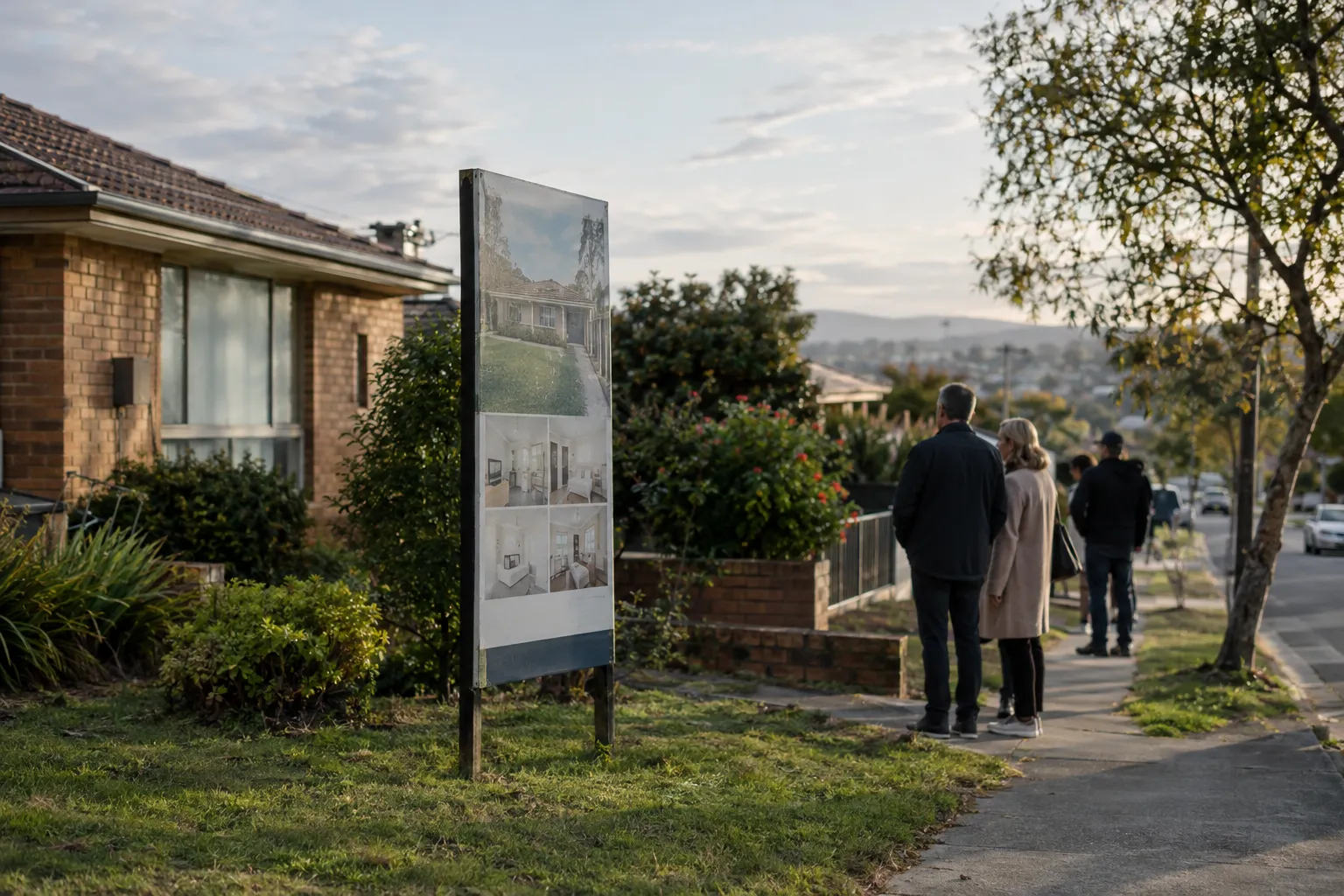
A survey can show buyers feeling better while the sales data shows them still waiting. That gap is the real story behind the latest jump in buyer sentiment.
A new consumer sentiment survey puts the share of prospective buyers who rate the timing as good at 49%. Earlier in 2026 it was 32%, when values sat at record highs and renewed inflation pushed the central bank into raising rates. National median values are now down 4.3% from their March peak. Sydney has dropped 6.7% and Melbourne 6.1% from late-2025 highs.
That is a genuine shift in mood. It is not yet a shift in market behaviour.
Mood is cheap, borrowing capacity is not
Asking someone whether prices look better than they did is easy. Getting a loan approved at a cash rate that has hit its highest level since 2008, after five increases this year, is harder. Sentiment measures what people want. Serviceability measures what a lender will let them do.
This is why the survey needs reading alongside our look at the data that confirms a property market bottom. A true floor usually shows up in approvals, clearance rates and time on market, not in how buyers say they feel.
Key numbers
- 49% of prospective buyers rate the timing as good, up from 32%
- National median values are down 4.3% from the March peak
- Sydney is down 6.7% and Melbourne 6.1% from late-2025 highs
- Sales take 44 days, against 31 a year earlier
- Listings are roughly 9% above last year
Where the optimism is concentrated
The lift is strongest where prices have fallen furthest. In Victoria, 59% of buyers rate the timing as good, and the gain is the largest of any state, from about one-third a year earlier. In New South Wales the figure is 55%. Opinion is more split in Western Australia and South Australia.
That pattern makes sense. Buyers feel better when the discount is visible. But a discount only helps someone who can still borrow enough to take advantage of it.
Slower sales hint at the friction
The timing numbers point to a market that is moving, just slowly. Sales are taking 44 days compared with 31 last year. Buyers are spending about 45 weeks searching, five weeks longer than before. A Sydney buyer’s agent quoted in the coverage says the improved mood has not yet produced more activity.
Supply is also uneven. Listings are about 9% above last year nationally. Brisbane, Adelaide and Perth carry roughly 40% more stock, while Sydney and Melbourne are flat. More choice in the smaller capitals does not necessarily mean easier deals if finance is the constraint. Our piece on home sellers cutting prices shows where discounting is already biting.
Sellers have lost their nerve faster than buyers have gained theirs
A year ago 48% said the timing was good for selling, but now only 18% do. That swing is bigger than the buyer improvement. Sellers expect less, which can narrow the gap between asking and offers. But a smaller gap still has to be financed.
Upgraders look best placed, since they sell and buy in the same softer market. First-time buyers carry the full weight of higher repayments with no offsetting sale.
Investors are divided, not retreating
Property remains a favoured wealth-building tool. After tax changes in the May budget, 25% of investors plan to sell, yet 39% still intend to buy. Interest in commercial property has risen to 15%. That is not a rush for the exits. It is investors re-weighing which assets and structures still make sense, and credit conditions will shape how many follow through. For rate context, see whether a weaker jobs market brings relief.
Scenarios for turning mood into sales
- Base case: sentiment stays elevated, lending stays tight, and sales volumes improve only gradually while prices drift lower.
- Upside: rates stabilise or ease, borrowing capacity recovers, and confident buyers finally convert, which would make this a stronger bottoming signal.
- Downside: further rate pressure or weaker incomes cap capacity, and sentiment fades before it ever lifts transactions.
What would show the shift is real
Watch loan approvals, auction clearance rates and days on market over the next few months. If sentiment rises while approvals stay flat, mood is running ahead of money. The practical step is to compare your own borrowing capacity at current rates against the price range you are considering, using a lender’s calculator with a buffer for further increases. Our guide to house prices, downturns and auctions explains which indicators matter most.
If you want the weekly signal, subscribe to the Australian Property Review newsletter.
General info, not financial advice.