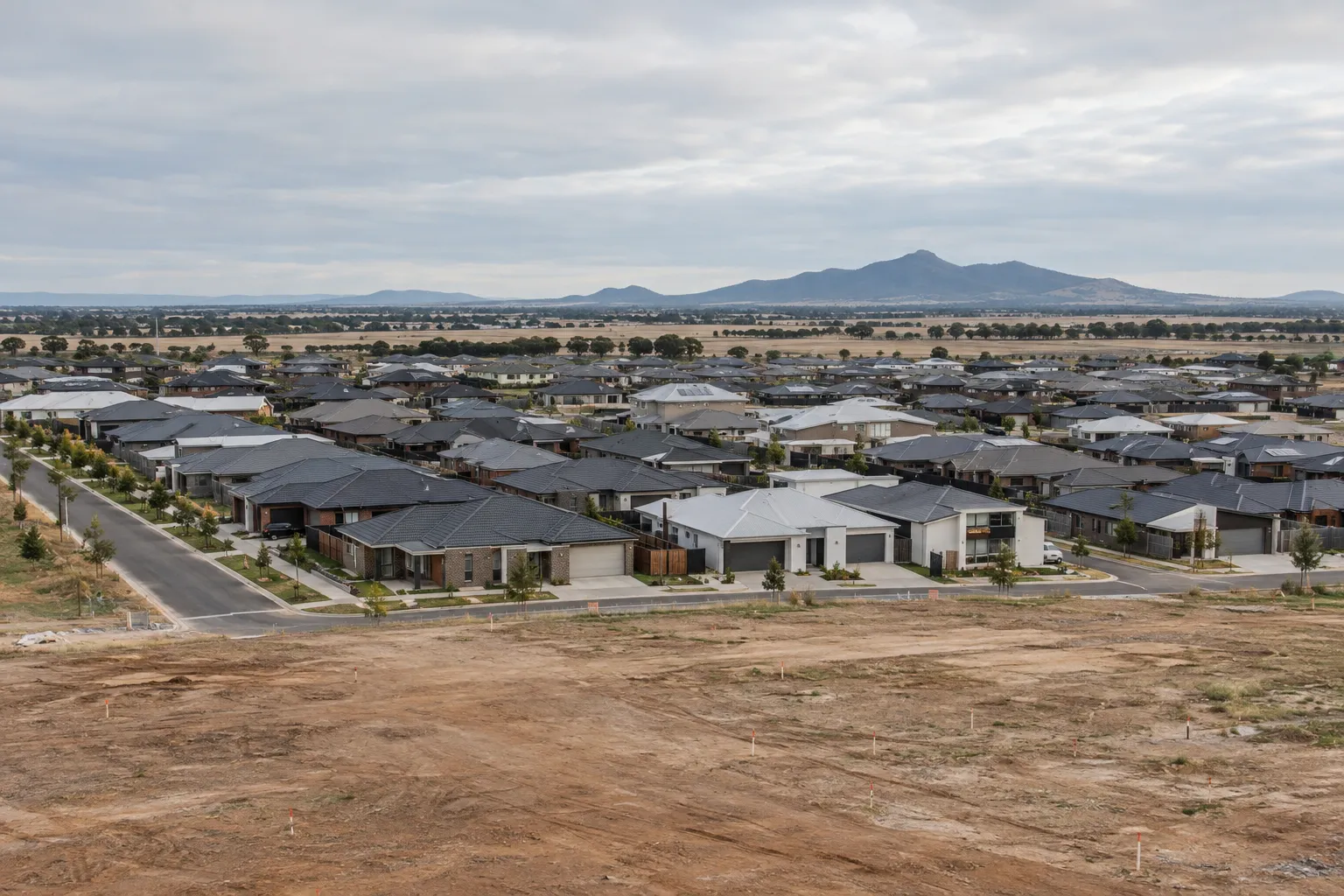
Geelong’s buyers are voting with their wallets, and the vote is for less land. Lots of 350sq m or smaller made up more than 35 per cent of third-quarter 2026 sales, according to GRIP Insights figures. A project marketing director says October ran closer to 45 per cent. Some of these blocks are roughly the size of a tennis court.
The Geelong land shortage is the story underneath. Developers are warning the city is building itself into a corner, and the numbers help explain why.
Demand for small lots is running ahead of supply
Here is the mismatch. Small lots take more than a third of sales, yet only about 20 per cent of available stock sits in that size band. Buyers want what is cheapest to enter, and that product is being absorbed faster than it is replaced.
The pull is clear in the growth corridors. Geelong’s north and Lara saw lot sales jump 76 per cent as new estates opened, including a 400-lot project at Corio. New supply released, and buyers showed up.
Key numbers
- Lots of 350sq m or less: over 35% of Q3 2026 sales, about 45% in October
- Share of available stock in that band: about 20%
- Median lot price: close to a record $397,000
- Approvals: near 65% of housing targets
- Early 2027 forecast: just 60 to 90 sales a month
In plain English: the cheapest blocks are selling out first, and the pipeline is not keeping pace.
Smaller blocks are an affordability workaround, not a cure
When the median lot sits near $397,000, shrinking the block is one of the few levers left. Developers are also loosening minimum lot size and garage rules, and the result is lower build quality in some estates. Buyers are trading size and specification for a price they can carry.
That trade-off has a cost beyond the lot. A $50,000 gap now favours existing homes over new builds in the corridor. If a house-and-land package on a tennis-court-sized block costs that much more than an established home, some buyers will simply skip the estate.
So the shift is real, but it tells you about constraint, not choice. People are not choosing postage-stamp blocks because they like them. They are choosing them because the larger versions no longer fit the budget.
What forecasts and rates add to the picture
The outlook is softer. Forecasts for early 2027 point to only 60 to 90 monthly sales, with rising interest rates dampening inquiries. That is a pullback on top of a supply problem.
This is the catch. Weak demand does not fix a land shortage. If sales slow because borrowing power shrinks, the pipeline can still be thin when conditions turn, and the next upswing meets the same bottleneck. Lower sales volumes can mask a structural gap rather than close it.
For wider context on how funding is changing, see our look at who funds new homes now as investor lending falls.
Approvals, not block size, may be the real lever
Approvals sit near 65 per cent of housing targets. That gap is where the pressure builds. Industry speakers have urged approval of precinct structure plans, including Creamery Rd, which stalled after requests for further work.
This is the question worth testing. Would releasing land faster do more for affordability than allowing smaller blocks? Smaller lots stretch existing land. Faster approvals add land. The two are not the same, and one does not substitute for the other.
There are trade-offs. Speeding precinct plans can strain infrastructure planning, and rushed estates carry their own risks for roads, schools and services. But slow approvals carry a price too, paid in record lot prices and cramped blocks. For a similar tension on the national scale, see why the 1.2 million homes target risks missing on location.
Scenarios for the next year
- Base case: Small lots keep taking a large share of sales while approvals lag, and the median lot price stays near its record.
- Upside: Stalled precinct plans like Creamery Rd are approved, more land comes to market, and pressure on small-lot demand eases.
- Downside: Higher rates keep thinning sales while approvals stay near 65 per cent of targets, so supply is short when demand returns.
The rental side has its own wrinkle, with a new-build glut meeting a shrinking landlord pool in the same city.
One thing to check
If you are weighing up an estate in the Geelong corridor, look at the minimum lot size and garage rules on the specific project, and compare the all-in package price with established homes nearby. The $50,000 gap is the number to pressure-test against your own situation.
If you want the weekly signal, subscribe to the free newsletter.
General info, not financial advice.