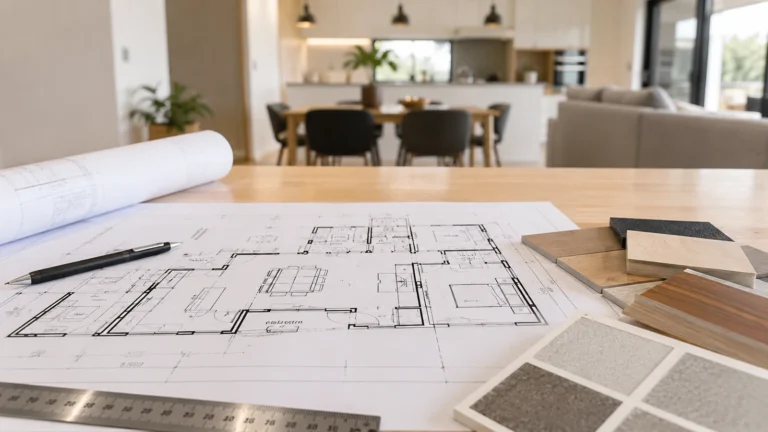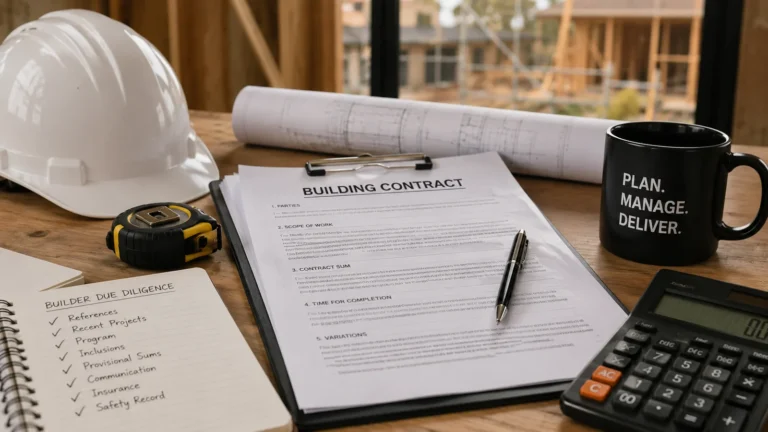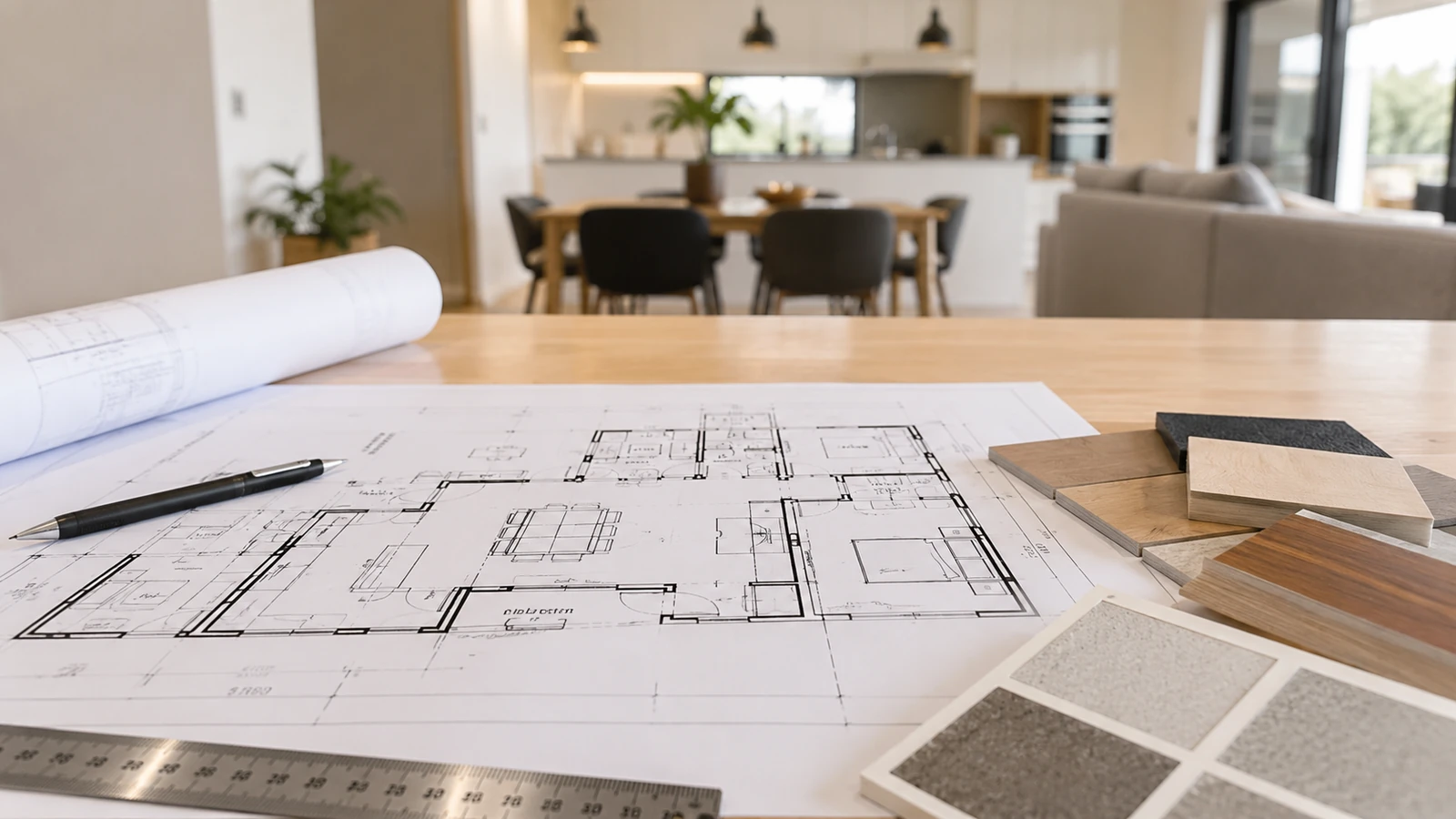
Dual occupancy design is one of those areas where a project can look strong in a spreadsheet and weak the moment a buyer walks through the front door.
That is the trap.
On paper, the numbers may stack up. The site has potential. The plans show the right bedroom count. The façade looks sharp. The feasibility has a profit margin. But if the living, dining and kitchen zone feels tight, the market can punish the project quickly.
For developers, especially smaller developers working on townhouses or dual occupancies, this is not just a design issue. It is a resale issue, a finance issue and a margin issue.
The mistake is simple: chasing too many features and leaving too little usable space where buyers actually spend most of their time.
The room that often decides the sale
In a dual occupancy, the living, dining and kitchen area usually carries more weight than many developers realise.
Bedrooms matter. Bathrooms matter. Storage matters. A second living space can help. But the main living zone is where buyers test the home emotionally.
They picture dinner with family. They picture guests around the island bench. They picture kids moving through the room, chairs being pulled out and someone trying to walk from the hallway to the kitchen without squeezing past furniture.
If that space feels compromised, the property can lose appeal even if the plan technically meets minimum standards.
That is the part most people miss. Minimum dimensions may help a design get through planning. They do not automatically create demand.
For more on how tight margins can change a project’s risk profile, read Australian Property Review’s guide to protecting property development margin.
Why the mistake starts early
The problem usually begins with good intentions.
A developer wants to maximise the site. The brief starts to grow. Four bedrooms instead of three. A master bedroom downstairs and another upstairs. Two living areas. Extra storage. A bigger garage. Maybe a study nook.
Each feature sounds reasonable on its own.
The pressure shows up when the floor plan has to fit inside the building envelope. Something has to give, and too often it is the living, dining and kitchen space.
That can be a costly trade-off.
A townhouse packed with features can still feel poor if the main living area cannot comfortably hold real furniture. A three-bedroom home with a generous living zone may sell better than a four-bedroom home where the dining chairs hit the wall and the sofa blocks movement.
Here’s the catch: buyers do not pay for a feature list alone. They pay for how the home feels.
In plain English
A dual occupancy does not fail because the plan looks bad.
It often fails because the plan looks acceptable, but the finished home feels cramped.
The risk is that the problem is discovered too late, after planning work, consultant costs, construction drawings and building contracts have already locked in the layout.
The furniture test developers should use
A floor plan without realistic furniture is not enough.
A proper check should show whether the space can handle normal living. That means a dining table that suits the likely buyer, chairs that can be pulled out, a sofa that matches the price point, a coffee table, an island bench and clear walking paths.
This is where the tape measure test matters.
Visit open homes that feel spacious and comparable to the product you want to build. Measure the living, dining and kitchen areas. Look at the furniture, not just the room size. Check how much space sits behind dining chairs. Check the clearance around the island. Check whether people can move through the room without turning sideways.
Then take those measurements back to your plan.
If your design cannot fit similar furniture with similar clearances, the plan is giving you false comfort.
This is not about creating a mansion. It is about building a home that feels right for its market.
The clearances that matter
There is no single magic number for every project, because site width, target buyer, price point and local market all matter.
But there are practical rules of thumb worth pressure-testing.
Around a kitchen island, about one metre of clearance on key working sides usually feels more usable than a narrow squeeze point. In the dining area, roughly 90 centimetres behind chairs can help people move past when someone is seated. Through the living zone, a clear path of about 90 centimetres can stop the room feeling blocked.
Bedrooms need the same discipline. A queen bed with two bedside tables should fit without making robe doors awkward. If a robe door hits the bed, or a buyer has to shuffle sideways to get around the room, the plan is not working hard enough.
The point is not fake precision. The point is movement.
A home is not lived in as a flat drawing. It is lived in by people walking, sitting, cooking, opening doors, carrying bags and moving around each other.
What changed and what didn’t
The market still rewards practical, well-designed homes.
That has not changed.
What has changed is the margin for error. Higher construction costs, finance costs and buyer caution mean developers have less room to hide design compromises. When a project depends on a strong resale price, a cramped main living area can do more damage than a slightly smaller bedroom or the loss of a secondary living space.
This is where feasibility and design need to talk to each other.
A feasibility is not only land cost, build cost, finance cost and expected sale price. It also relies on whether the finished product can justify the sale price assumed in the model.
Australian Property Review has covered this wider issue in its analysis of why project feasibility matters.
Check the plan three times
The mistake is avoidable, but only if it is checked before the project becomes hard to change.
The first check should happen at preliminary design stage. This is when the big layout decisions are still flexible. If the living, dining and kitchen area already looks tight here, it will probably not improve by accident.
The second check should happen before the town planning application is lodged. At this point, developers should review the plan as a buyer would. Can the dining table fit? Can chairs pull out? Is the island clearance workable? Is there a natural path from entry to kitchen and from garage to pantry?
The third check should happen before the building contract is signed. Small changes can creep in during consultant coordination, planning responses and construction documentation. A wall shifts. A cupboard grows. A hallway widens. A service area takes space. Each change may look minor, but together they can shrink the living zone.
That is why the main living area needs to be treated as a protected part of the project, not leftover space.
The trade-off developers need to accept
The hardest decision is often cutting something that looks good in the brochure.
That may mean three bedrooms instead of four. It may mean moving the main bedroom upstairs. It may mean deleting a second living area. It may mean simplifying the layout to reduce wasted hallways, odd angles or dead corners.
This can feel like going backwards.
It is not.
A cleaner layout with one strong living zone can be more valuable than a crowded plan trying to claim every possible feature. Buyers notice comfort. They notice light, movement and furniture placement. They notice whether the home feels easy.
In a dual occupancy, that feeling can decide whether the property attracts strong competition or becomes a price negotiation.
Red flags on the drawings
Developers should be careful when a plan relies too heavily on minimum dimensions.
A note that says a room meets minimum requirements should not be treated as a green light. It should trigger a second look.
The same applies when furniture is missing, undersized or drawn in a way that flatters the plan. A tiny dining table, narrow sofa or unrealistic bed placement can make a room look more functional than it will be when built.
Ask for furniture to be drawn to scale.
Use a proper dining table. Use a three-seat sofa. Use a queen bed with bedside tables. Then check the walking space around them.
If the plan only works with unrealistic furniture, it does not really work.
What could derail the project
The main risk is that design compromises become locked in before they are properly tested.
Planning delays can also make developers reluctant to change a layout once the process has started. That is understandable, but it can be expensive. A few weeks of redesign may be cheaper than accepting a finished product that buyers mark down at inspection.
Another risk is relying too heavily on the designer or planner to solve the commercial problem. Good consultants matter, but the developer still needs to own the buyer outcome.
Council approval is one hurdle. Market acceptance is another.
Bottom line
Dual occupancy design should not start with the maximum number of rooms. It should start with the way the home will actually be used.
Protect the living, dining and kitchen area first. Test the plan with real furniture. Check movement around the island, dining table, sofa and bedroom furniture. Then repeat the check before planning lodgement and again before signing the building contract.
If you’re thinking, “okay, but what should I do?”, start here: print the plan, mark up real furniture to scale, then compare it with two open homes that already feel spacious in the same buyer segment.
A dual occupancy can still be a strong development play. But the profit is not only in the land and the build cost. It is in the parts of the home buyers can feel the moment they walk in.
For more property market guides and practical investor analysis, subscribe to the free Australian Property Review newsletter at newsletter.apreview.com.au.
General info, not financial advice.