Offshore developers have committed capital to more than 1,000 branded luxury residences across Australia by end-2026, up from 354 a decade earlier. That’s not incremental growth. It’s a structural bet on a narrow slice of the market while the rest grinds through serviceability constraints and median price corrections.
The question for anyone watching capital flows: is this tier insulated by scarcity and global wealth creation, or does it inherit the downside when credit tightens and discretionary spending pulls back?
The capital commitment and where it’s landing
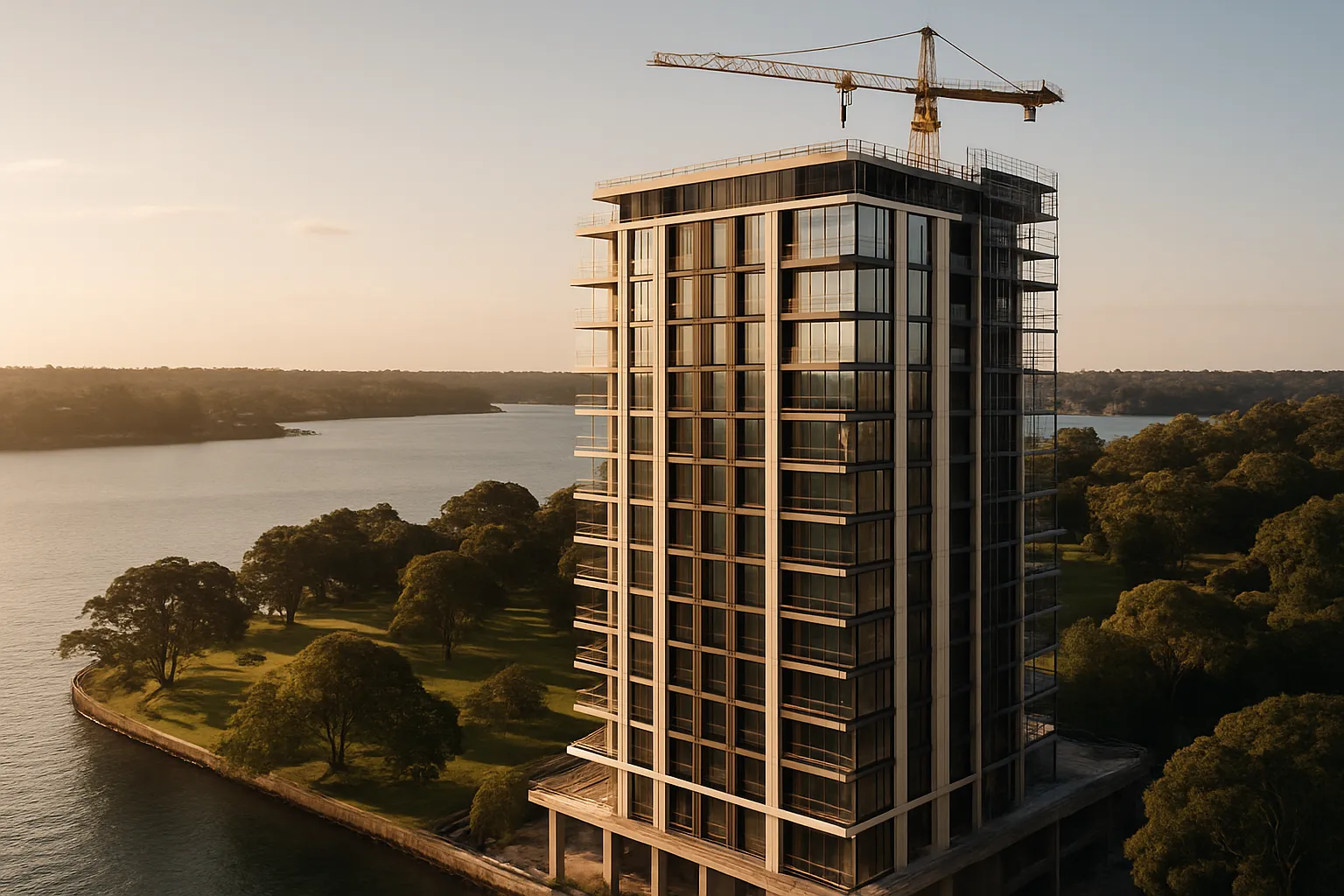
Branded residences are developments tied to globally recognised hospitality or luxury brands, typically priced well above local median rates and offering concierge services, design premiums and long-term management contracts. Think hotel-branded towers, not volume apartment builds.
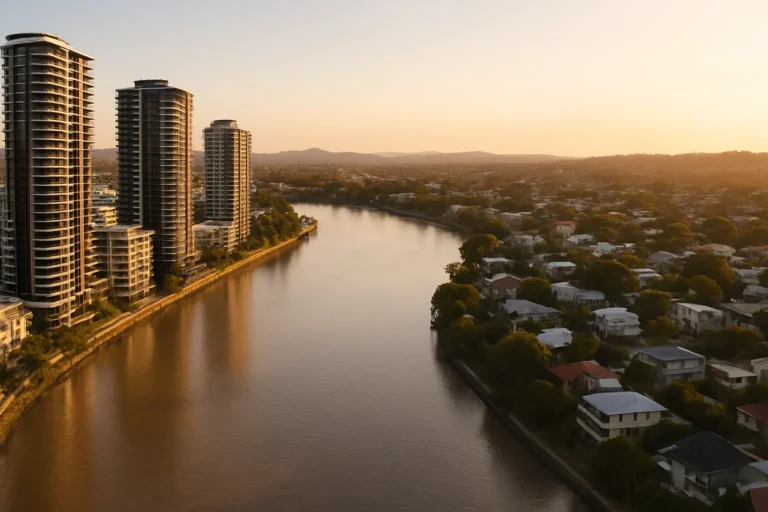
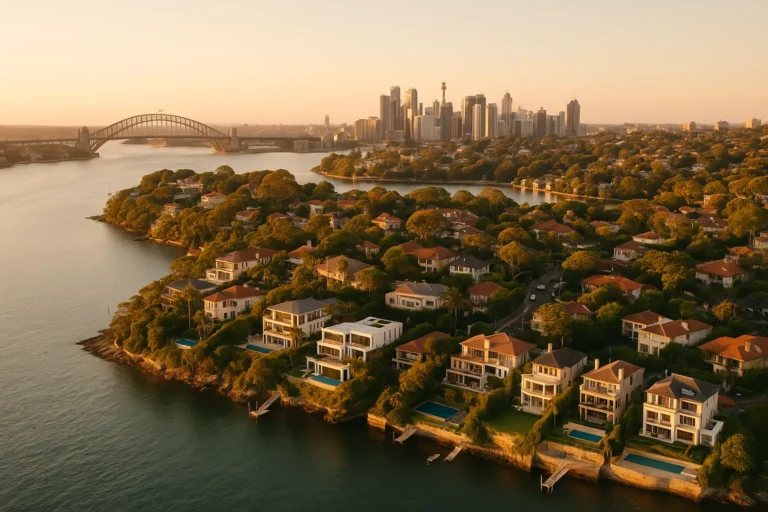
Knight Frank’s 2026 Residence Report tracks the pipeline. Queensland is absorbing 60 per cent of new supply, driven by infrastructure spend ahead of Brisbane’s 2032 Olympics. Sydney and Melbourne account for the rest, concentrated in prime harbour or inner-city precincts.
Gold Coast and Perth ranked eighth and tenth globally for five-year price growth in the luxury segment. Sydney recorded 2,480 residential sales above USD $10 million in the year to Q1 2026, sixth globally by transaction volume.
Those numbers reflect two realities: Australia’s stable legal framework and tax settings relative to other offshore wealth-parking destinations, and a structural appetite among ultra-high-net-worth individuals who now hold an average of 3.8 properties per person, up from 2.9 a decade ago.
Why developers are backing this tier now
Luxury branded developments typically require $300 million to $1 billion in committed capital before a shovel hits dirt. That scale of upfront risk suggests offshore sponsors see durable demand or at least confidence they can exit before a downturn bites.
Three structural drivers support that view. First, global UHNW wealth grew faster than housing supply in gateway cities, creating scarcity premiums that compound over cycles. Second, Australia’s combination of yield, capital preservation and residency pathways remains competitive against Vancouver, Auckland and Singapore. Third, the Olympics infrastructure pipeline de-risks the Brisbane and Gold Coast pipeline by front-loading transport, amenity and precinct upgrades that typically take decades.
But the same infrastructure spend is being financed through state debt. Queensland’s credit downgrade signals fiscal pressure that could slow future public investment or shift tax settings, particularly around foreign ownership surcharges and land tax exemptions that currently favour this tier.
The trade-off: early movers lock in favourable settings and capture scarcity premiums. Late movers inherit policy risk and potentially thinner buyer pools if broader affordability pressures reduce upgrade demand from local high earners.
The insulation thesis and its limits
Luxury segments historically decouple from median price corrections during early-cycle downturns. Buyers at this tier self-finance or use low loan-to-value ratios, so serviceability shocks hit less hard. Scarcity in prime locations also compresses supply faster than demand can fall.
But three risks complicate that narrative now. First, discretionary spending correlates with wealth effects from housing, and if the median market contracts 10-15 per cent, even affluent households reassess discretionary property purchases. Second, foreign buyer demand depends on currency stability and relative offshore returns. If Australian yields compress while USD rates stay elevated, capital reallocates. Third, oversupply risk is real when 60 per cent of a national pipeline concentrates in one state over a compressed timeframe.
The base case: this tier outperforms median markets through 2027, supported by Olympics momentum and offshore wealth flows. The downside case: completion risk rises if pre-sales slow, developers pull projects, and finished stock sits longer than modelled, compressing realised yields and forcing price resets.
The numbers that matter
- Branded luxury developments in Australia grew from 354 in 2015 to over 1,000 by end-2026
- Queensland absorbing 60% of new supply, concentrated in Brisbane and Gold Coast
- Sydney recorded 2,480 sales above USD $10 million in the year to Q1 2026
- Global UHNW individuals now hold 3.8 properties on average, up from 2.9 a decade ago
- Gold Coast and Perth ranked 8th and 10th globally for luxury price growth over five years
The second-order effects on median markets
When capital flows into luxury tiers, it pulls construction resources, planning approvals and developer attention away from volume mid-market supply. That’s fine if luxury completions eventually filter down through upgrade chains. It’s a problem if luxury stock sits vacant or gets held as capital stores rather than lived-in housing.
The Olympics infrastructure spend also creates a near-term construction cost floor that flows through to all residential builds. If luxury projects absorb labour and materials at premium rates, mid-market feasibility gets squeezed, slowing the supply response that would otherwise ease affordability pressures.
That dynamic matters for anyone watching rental markets or holding mid-tier investment stock. If luxury supply grows while affordable supply stalls, vacancy rates at the median compress further, sustaining rental growth even as sale prices correct. That’s the rental supply gap playing out in real time.
Scenarios over the next 18 months
Base case: luxury completions land as planned, absorb offshore and domestic upgrade demand, outperform median markets by 8-12 percentage points through 2027. Queensland’s Olympics timeline holds, infrastructure upgrades complete on schedule, and foreign buyer appetite remains stable.
Upside case: broader market correction accelerates upgrade demand as high-net-worth locals reallocate from equities or offshore holdings into Australian property. Capital preservation trumps yield, luxury stock absorbs flight-to-quality demand, price premiums widen further.
Downside case: global risk-off sentiment or currency moves redirect offshore capital, pre-sales slow, developers defer or cancel launches. Completed stock takes longer to clear, yields compress, and the scarcity premium that justified land acquisition pricing evaporates. Queensland’s fiscal position deteriorates further, prompting tax setting changes that reduce foreign buyer appetite or increase holding costs.
Watchlist: foreign buyer inquiry volumes month-to-month, pre-sale commitment rates on new launches, any policy shifts around foreign ownership surcharges or land tax exemptions, and whether infrastructure timelines for Brisbane 2032 hold or slip.
If you’re deciding now
If you’re considering luxury stock as a capital preservation play or second-home purchase, pressure-test three assumptions. First, can you hold through a 24-month liquidity event if the buyer pool thins? Luxury takes longer to transact when sentiment shifts. Second, are you buying for yield, capital growth, or lifestyle? The answer changes which projects and locations make sense. Third, what’s your exit scenario if policy settings shift or offshore appetite cools?
If you’re holding mid-market investment stock and watching capital flow into luxury tiers, the practical question is whether that flow delays affordable supply enough to sustain rental growth in your segment. The answer depends on your city and micro-location, but the structural dynamic is real.
For a weekly breakdown of capital flows, supply pipelines and policy shifts across all tiers, subscribe to the Australian Property Review newsletter.
General info, not financial advice.