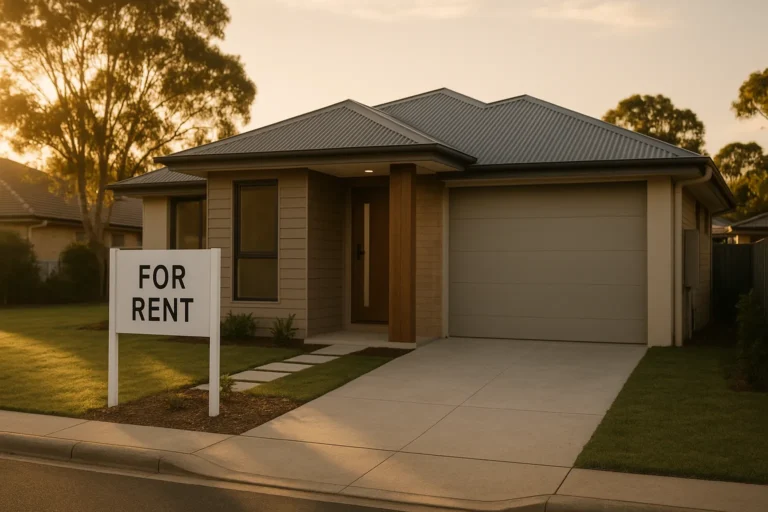
Buyers have something they have not had for years: time. The property downturn buyers negotiating power story is now showing up in the numbers, with combined capital city values down for a seventh straight month in October and an accumulated fall of 8.1 per cent.
But a national figure hides the detail that matters. The decline is far from uniform, and the opportunities and risks differ by city and by segment.
Seven months down, but the damage is lopsided
The peak-to-date falls vary widely across the capitals:
- Sydney: down 10.1 per cent since February 2026
- Perth: down 8.9 per cent
- Brisbane: down 8.3 per cent
- Melbourne: down 7.8 per cent, measured from November 2025
- Adelaide: down 4.4 per cent
Regions look different. They are down 3.1 per cent from peak, yet still 3.4 per cent higher over the year. Darwin and Hobart show no clear decline at all.
That spread matters. A buyer in Sydney is negotiating in a market that has already given back a tenth of its value. A buyer in Adelaide or a regional town is dealing with sellers who have lost far less and may be slower to cut.
What the discounting and selling-time numbers say
Leverage shows up first in how sellers behave. Discounting has widened for eight months running and now sits at 4.5 per cent. The median selling time is 41 days.
In plain English: vendors are taking less than they first asked, and homes are taking longer to sell. That is the textbook shift from a seller’s market to a more balanced one.
The pockets of deeper discounting are striking. A buyers’ agent body identified 20 suburbs where discounts ran from 8.7 per cent to more than 14 per cent. Those are not typical outcomes, but they show how much room exists where sellers are most stretched.
The catch: a lower price is not the same as better value
Here is the part most people miss. Prices fell in 25 of 33 markets, yet relative affordability improved in only 13.
That gap is the catch. Cheaper does not automatically mean easier to afford once you account for incomes and borrowing costs. A market can fall and still be out of reach for the typical household.
It also means a big discount can be a warning rather than a gift. If a suburb is discounting heavily because demand is genuinely thin, falls may have further to run. Buying into a falling market on the first sign of a discount risks paying today’s price for tomorrow’s lower value.
If you want to see how selling methods change what a headline price really means, our guide to house prices, downturns and auctions covers the mechanics. Our look at underquoting laws and why price guides still sit too low is a useful companion when reading asking prices in a soft market.
Where the yields are lifting
Investors have a second reason to look closely. Rental yields are lifting, and the national figure now sits at 3.9 per cent.
A lower price with steady rents lifts the yield. That helps cashflow, which matters when buffers are thin. It does not remove the risk of further capital falls, but it changes the holding-cost arithmetic.
Perth is a useful case study of how steep a single city’s slide can be. We broke that down in our piece on the Perth property market and its 8.9 per cent slide from the April peak.
Rates are the constraint on how far this runs
An industry economist expects interest rates to stay on hold through most of 2027. That is a base case, not a promise.
If rates sit still, buyers do not get relief on repayments, but they also avoid fresh pressure. Prices then have to find their level on supply, demand and confidence alone. A long hold supports the view that this is a slow grind rather than a sharp reset, though a surprise either way would change that.
How to use the leverage without overreaching
A few practical checks before you negotiate:
- Check the discounting trend for the specific suburb, not the city. Some of the 20 hotspots sit far above the 4.5 per cent average.
- Look at time on market. A property sitting well past 41 days gives you more room.
- Test your repayments against a higher rate, even if the base case is a hold.
- Keep a cashflow buffer. If prices keep slipping, you want to be a holder, not a forced seller.
- Compare yield against likely further falls, rather than treating yield as a floor.
The bottom line: buyers do hold more cards than they did, and the data backs it up. But the leverage is strongest where sellers are most under pressure, and those are often the same places where prices may have further to fall. Pressure-test the suburb before you pressure the vendor.
Start here: pull the discounting and days-on-market figures for your target suburb before you make an offer.
Want the weekly signal? Subscribe to the newsletter.
General info, not financial advice.