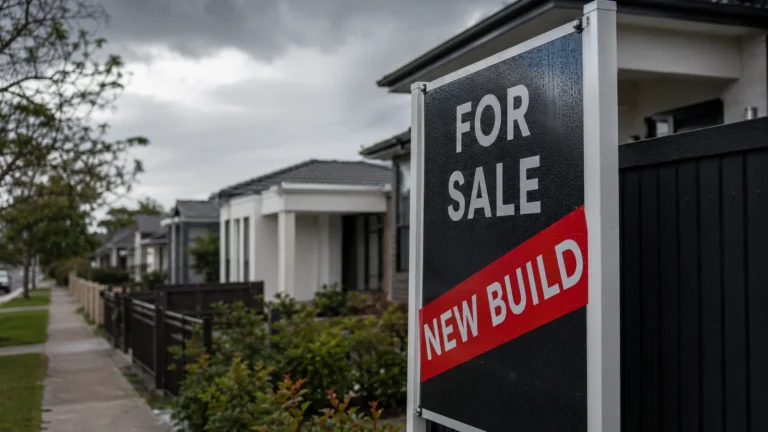
Victoria’s budget has a property problem, and it is getting bigger. The pre-election update forecasts stamp duty receipts $890m below what the May budget assumed for this financial year. Sales are falling, and so is the tax take that depends on them.
The awkward part for voters is what the parties are not offering. None of the major groups contesting the state election has put forward anything likely to lift transaction numbers before next May’s budget, even though more sales is among the quickest ways to raise revenue.
How a slow market becomes a budget hole
Stamp duty is a tax on turnover, not on value alone. When fewer homes change hands, the state collects less, even if prices hold up. That makes it one of the most volatile revenue lines a government has.
The latest sales figures show how fast that can move. One of the state’s biggest agencies reports October sales roughly 33 per cent lower than a year earlier. Homes priced above $4m are down about 50 per cent, and those carry the largest duty bills per sale.
The same agency expects November to fall by at least 35 per cent, with weak volumes lasting another four months. On that reading, a recovery looks like a 2025 story, well after the next budget is framed.
Key numbers
- $890m: forecast stamp duty shortfall against the May budget this financial year
- About 33 per cent: fall in October sales from a year earlier at one major agency
- About 50 per cent: fall for homes priced above $4m
- $300,000: the land tax threshold both Labor and the Liberals want to restore
The catch: the tax that is hardest to cut is the one the budget leans on
An industry economist argues Victoria relies too heavily on stamp duty, which carries the highest effective rate in the country. High rates discourage people from moving, which shrinks the very base the tax relies on.
The same economist says higher turnover is still the fastest short-term fix. That is the tension. Reform away from stamp duty is a slow project, but the budget gap is a near-term one.
What the election policies do, and when
The land tax promises are the clearest overlap. The industry body’s chief executive welcomed Labor and Liberal plans to restore the land tax threshold to $300,000. Labor’s version is staggered through 2033-2034, so the relief for investors arrives slowly. Land tax matters for supply because it is a running cost for the people who own rental stock.
On the buyer side, the Coalition and Greens would widen first-home-buyer stamp duty relief, to $1m and $1.1m respectively. That could help entry-level buyers on paper. But legislation would delay any effect, so it will not move sales volumes in the months when the budget needs them. One Nation did not respond.
For readers, the pattern is worth noting. Several policies target the medium term, while the revenue gap is a short-term one.
Second-order effects for investors and renters
A softer market and a squeezed budget can pull in different directions. If the state faces pressure to fill the gap, taxes that fall on property owners are harder to cut quickly. Investors who have been retreating from the market, as our look at Victorian rental supply and falling investor loans shows, are sensitive to those running costs.
Fewer investors means fewer rentals coming online, which feeds back into rent pressure. Buyer-side incentives and landlord-side tax settings are linked, even when parties announce them separately. For background on how these settings fit together, see our guide to budget, policy and government housing schemes.
What would change my mind
The forecast is a base case, not a certainty. A faster pick-up in sales, a rate cut that revives confidence, or a surprise policy that brings forward buyer incentives could narrow the gap. Equally, if volumes stay weak past the four months the agency expects, the shortfall could widen.
The practical step is to read the fine print on timing. When a party announces tax relief, check the start date, any staging, and whether it needs legislation first. That tells you more about the impact on your own numbers than the headline threshold does.
If you want the weekly signal, subscribe to the free newsletter.
General info, not financial advice.