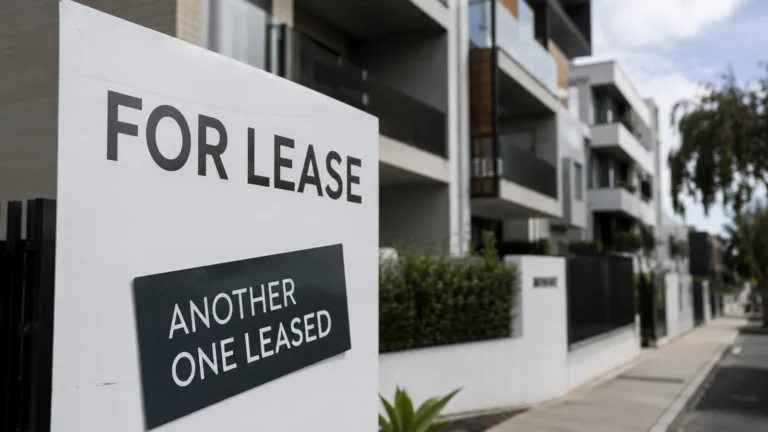
Westpac is warning that interest-only loans could make a sharp comeback as property investors respond to the Federal Budget’s tax changes.
That matters because this is not just a lending product story. It is a signal about investor behaviour.
When tax settings change, investors do not simply disappear. Some pause. Some redirect capital into new builds. Some reduce debt. Others look for ways to preserve cashflow.
That last group is where interest-only lending becomes important.
Under an interest-only loan, the borrower pays the interest bill for a set period but does not reduce the principal. The monthly repayment is lower than a principal-and-interest loan, but the debt does not shrink during that interest-only period.
That can help cashflow. It can also hide risk.
Westpac consumer chief Carolyn McCann has reportedly said the bank expects investor borrowing patterns to shift after the Budget changes to negative gearing and capital gains tax. Westpac is also reported to have seen a 10 per cent fall in home loan applications after the announcement, driven by investors pulling back to reassess.
The immediate story is weaker investor demand. The bigger story is what those investors do next.
What actually changed for investors
The Budget changes narrow the tax advantage attached to some investment property purchases.
Westpac’s own Budget explainer says existing investors are grandfathered, meaning the reforms apply to new investments from 1 July 2027. It says new investors will no longer be able to offset rental losses against other income, except for new builds, while new builds retain the 50 per cent capital gains tax discount.
In plain English, the government is trying to push investor money away from established homes and towards new supply.
That does not remove investor demand. It changes the maths.
A negatively geared property used to offer some investors a tax offset when rent failed to cover costs such as interest, rates, insurance and management fees. If that treatment becomes less available for established dwellings, the after-tax cost of holding a property changes.
Australian Property Review has already covered how negative gearing grandfathering may trap some investors and why the negative gearing shake-up could push investors towards new apartments.
The Westpac signal adds another layer: investors may not only change what they buy. They may change how they borrow.
Why interest-only loans become tempting
Here’s the catch.
When an investor loses part of a tax benefit, the holding cost can rise. If the rent does not rise enough to offset that, the investor has three basic options.
They can put in more cash each month.
They can buy a different property.
Or they can restructure the debt to reduce the monthly repayment.
That is where interest-only loans come in.
A principal-and-interest loan forces the borrower to pay interest and gradually reduce the debt. An interest-only loan usually lowers the repayment during the interest-only period because the borrower is not paying down principal.
For a landlord under cashflow pressure, that can feel like breathing room.
But it is not free money. It is a timing trade-off.
The loan balance stays higher for longer. The borrower may pay more interest over the life of the loan. If the interest-only period ends and repayments switch to principal and interest, the repayment jump can be uncomfortable, especially if rates remain elevated or rents soften.
Australian Property Review covered a related version of this in its earlier analysis of 15-year interest-only loans in Australia. The key point was simple: a longer runway can help cashflow, but it can also delay the moment when the investor has to prove the strategy works.
The part borrowers may miss
The Budget shock does not land evenly.
A high-income investor with a large buffer, low loan-to-value ratio and strong rent may treat interest-only lending as a portfolio tool. That borrower may use the spare cash to maintain buffers, fund repairs, or hold through a weak part of the cycle.
A stretched investor is in a different position.
For them, interest-only can become a pressure valve. It lowers the repayment, but it may not fix the investment. If the property has weak rent growth, rising strata costs, high vacancy risk, or limited resale demand, the loan structure only buys time.
That is why serviceability matters.
Serviceability is the lender’s test of whether a borrower can afford the loan after allowing for income, expenses, existing debts and an interest-rate buffer. Australian Property Review has explained why serviceability, not the deposit, often stops investors from buying the next property.
Interest-only lending can improve cashflow in the short term. It does not automatically improve the quality of the asset, the tenant demand, or the borrower’s long-term borrowing power.
In plain English: Interest-only loans can reduce the monthly repayment, but they do not reduce the debt. That is useful when cashflow is tight. It is dangerous if the investor uses it to hold a poor asset for longer.
Why banks care about the shift
Westpac is not looking at this only as a policy issue. It is looking at customer behaviour.
The bank is reported to be trying to retain more retail customers, increase direct home loan writing and lift the share of mortgages written through its own channels rather than relying as heavily on brokers. It is also targeting new arrivals and international students through selected branches.
That matters because the lending market is competitive.
If investor appetite weakens, banks have to fight harder for the borrowers still active. If those borrowers increasingly want cashflow flexibility, interest-only features become part of the competition.
But this is where regulators may pay attention.
Australia has been here before. A rapid rise in interest-only lending in the previous cycle helped trigger prudential limits from the Australian Prudential Regulation Authority. The concern was not that interest-only loans are always bad. It was that too much of the system was leaning on loans where debt was not being paid down.
That risk has not disappeared.
What could derail the interest-only comeback
There are four pressure points to watch.
First, the final policy design still matters. Investors are making decisions based on announced settings, lender responses and their own assumptions. If the detail changes, borrowing behaviour could shift again.
Second, banks may tighten assessment rules. Some lenders have already adjusted how they treat negative gearing in serviceability calculations for affected properties. Macquarie has reportedly stopped including negative gearing in serviceability calculations for some established property purchases after the Budget, while Westpac had flagged that changes may be coming.
Third, regulators may not want a fast build-up in interest-only risk. If investor lending moves too quickly into interest-only structures, APRA could become more cautious.
Fourth, rents and prices may not cooperate. A borrower can manage a higher holding cost if rent rises, vacancy stays low and the asset keeps its value. The problem comes when cashflow pressure meets flat rents, higher costs and weaker valuations.
That is when a cashflow strategy can become a refinancing problem.
What this means for property investors
The practical takeaway is not that interest-only loans are good or bad.
The question is whether the loan structure matches the investment case.
If an investor is using interest-only lending to preserve cash while holding a strong asset, with a clear exit plan and a buffer, it can be a rational tool.
If they are using it because the property no longer works on principal-and-interest repayments, that is a warning sign.
A useful rule of thumb is this: pressure-test the deal as if the interest-only period ended tomorrow.
Could the rent, income and buffer handle the higher principal-and-interest repayment? Could the loan still be refinanced if the valuation came in flat? Would the asset still make sense if the tax benefit was smaller than expected?
If the answer is no, the investor may not be buying flexibility. They may be buying time.
Bottom line
Interest-only loans could become one of the Budget’s second-order effects.
The headline policy is about negative gearing and capital gains tax. The credit-market response may be about cashflow, serviceability and loan structure.
That is where property investors need to be careful.
Tax settings can change. Lending policies can change. Repayments can change. A good investment strategy needs to survive more than one version of the rules.
Start here: before choosing an interest-only loan, run the numbers on both interest-only and principal-and-interest repayments, then add a buffer for vacancy, repairs and rate changes.
For the weekly signal without the noise, subscribe to the free Australian Property Review newsletter: https://newsletter.apreview.com.au
General info, not financial advice.