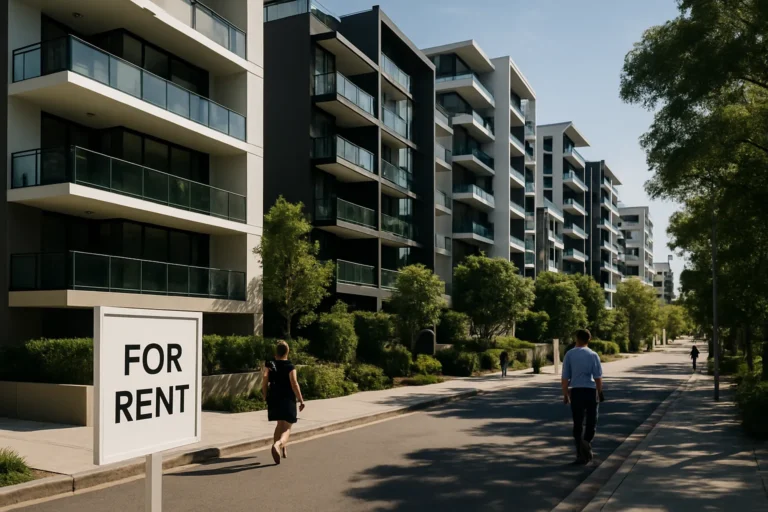
The rentvesting playbook, rent in the city, buy an investment property somewhere cheaper, promised the best of both worlds for a generation of first-time buyers. Live where you want to work, build equity where you can afford to buy, and let negative gearing cover the gap.
That gap is now a chasm. Metro rents have climbed faster than regional yields can cover, borrowing costs have doubled, and the tax benefit that papered over the shortfall no longer offsets the monthly bleed. For buyers weighing the strategy today, the numbers fail before the deposit clears.
How rentvesting was supposed to work
The logic was simple: buy a property in a regional or outer-suburban market where entry prices sit below the metro median, rent it out to cover most of the mortgage, and claim the interest and holding costs as a tax deduction. Meanwhile, pay rent in the city where your job, social network and lifestyle sit, knowing you are building equity in an asset you own outright.
The strategy relied on three assumptions. First, that rental income from the investment property would cover a meaningful portion of the mortgage repayments. Second, that negative gearing and depreciation deductions would reduce the after-tax cost of the shortfall. Third, that capital growth on the investment property would outpace the opportunity cost of not living in it.
For much of the 2010s, those assumptions held. Borrowing rates sat below 4 per cent, regional yields hovered around 4.5 to 5.5 per cent, and metro rents were stable enough that the rental cost of city living did not spiral beyond what a first-time buyer could sustain on a single or dual income.
What broke the model
Interest rates are the blunt instrument. A buyer who locked in a regional investment property in 2020 at 2.5 per cent is now rolling onto rates near 6 per cent. Monthly repayments on a typical loan have nearly doubled, but rental income from that regional property has not kept pace.
Regional rental yields have compressed, not expanded. Tighter vacancy rates pushed some regional rents higher during the pandemic, but those gains plateaued as borders reopened and the supply of short-term and investor stock returned to the market. In many regional centres, gross yields now sit between 4 and 5 per cent, which sounds workable until you subtract rates, insurance, maintenance, property management and vacancy.
Meanwhile, metro rents kept climbing. A renter in Sydney or Melbourne is now paying 20 to 30 per cent more than they were three years ago for the same apartment. That increase alone wipes out the tax benefit mostrentvestors were banking on to close the monthly gap.
The tax deduction still exists, but its value has shrunk relative to the scale of the shortfall. Negative gearing offsets taxable income, not cashflow. If the gap between mortgage repayments and rental income is now two or three thousand dollars a month, the tax refund at year-end covers a fraction of that.
The catch
The shortfall is not temporary. Buyers entering the strategy today face structurally higher debt servicing costs, persistently elevated metro rents, and regional yields that remain below the threshold needed to cover holding costs. The break-even calculation that worked in 2018 is off by enough that the strategy now depends on perfect capital growth and zero life disruptions.
Where the strategy still pencils
A narrow subset of scenarios can still work. A buyer with a high marginal tax rate, stable dual income, low metro rent due to housemates or family arrangements, and access to a regional property with a genuine 5.5 per cent yield might keep the monthly bleed within tolerance.
But that profile describes a shrinking cohort. Most first-time buyers considering rentvesting are single or early-career households facing metro rents of 30 to 40 per cent of gross income, borrowing near their serviceability limit, and looking at regional properties with realistic net yields closer to 3.5 or 4 per cent after all costs.
For those buyers, the strategy does not survive contact with a rate hold, let alone a rate rise. The cashflow gap compounds every month, and capital growth takes years to materialise.
The alternative no one wants to hear
The path that stacks up is the one that requires compromise: buy within commuting distance of where you work, accept a smaller or older property, and live in it while you pay it down. Owner-occupier loans carry lower rates, you avoid double housing costs, and you can make renovations or improvements that lift value without triggering CGT on sale.
The lifestyle trade-off is real. It might mean a 90-minute commute, a suburb without cafes, or a unit instead of a house. But the financial logic is hard to argue with when the alternative is paying rent and an outsized mortgage shortfall simultaneously, with no guarantee the regional property appreciates faster than the metro market you opted out of.
What happens from here
Rentvesting will not disappear entirely, but it will revert to the niche it was always meant to occupy: high earners with strong cashflow buffers, buyers relocating temporarily for work, or investors who already own a metro property and are adding a regional asset for diversification.
For first-timers, the question is not whether rentvesting works in theory, but whether it works on your balance sheet today. Run the numbers with current rates, realistic yields, and your actual metro rent. If the gap requires you to find two thousand dollars a month from savings or salary just to hold the position, the strategy is not a stepping stone, it is a trapdoor.
Somebrokers and spruikers will still pitch rentvesting as the clever workaround for affordability, often paired with off-the-plan regional stock or new builds in mining towns. The sales pitch focuses on depreciation schedules and tax refunds, not the cashflow gap or the liquidity risk of holding a property in a thin market if you need to sell.
Be sceptical of any scenario that assumes rents will rise faster than interest rates, or that capital growth will cover the shortfall before your savings run dry. Those are probabilities, not certainties, and the downside is losing your deposit and your credit rating in the same year.
Bottom line
The rentvesting strategy worked when rates were low, metro rents were stable, and regional yields were high enough to matter. None of those conditions exist today. For most first-time buyers, the maths now points to a single answer: buy where you can afford to live, or wait until you can.
If the numbers still look tight, this guide to buyer confidence and price trends walks through what is shifting demand right now, and this breakdown of affordability in WA shows what serviceability looks like at the edge of the market.
Start here: pull your last three months of rent payments, your target mortgage repayments at current rates, and realistic rental income from any property you are considering. If the gap is more than 10 per cent of your net income, the strategy does not stack up. Subscribe to Australian Property Review for the weekly read on what is moving markets and what it means for your next decision.
General info, not financial advice.